 blog
Best Mild Cheese for Beginners: 7 Easy Picks to Try
Table of Contents
- What Makes a Cheese Mild? A Beginner's Mildness Scale
- The Best Mild Cheese for Beginners: 7 Ranked Picks
- Best Soft Cheeses for Beginners: What to Buy First
- Mild Cheeses for a Cheese Board: Building Your First Spread
- Mild Cheese and Wine Pairings That Work
- Mild Cheese That Melts Well: Cooking and Serving Tips
- How to Buy and Store Mild Cheese
- Conclusion
- Frequently Asked Questions
Last Updated: October 18, 2026
What Makes a Cheese Mild? A Beginner's Mildness Scale
Mild cheese is cheese with low acidity, low salt, and little to no aging, which keeps flavors creamy and gentle rather than sharp or pungent.
Mildness is not one flavor. It's a range. Fresh cheeses like ricotta sit at the gentlest end, with a clean, milky taste and almost no tang.
Here's the scale we use when guiding first-time buyers:
| Level | Flavor Profile | Examples |
|---|---|---|
| 1 - Delicate | Milky, clean, barely tangy | Ricotta, mascarpone, fresh mozzarella |
| 2 - Gentle | Buttery, slightly sweet | Havarti, Colby, Fontina |
| 3 - Softly Savory | Creamy with a mushroom edge | Brie, Camembert |
| 4 - Tangy | Bright acidity, still approachable | Chevre, Queso Fresco |
A common mistake is assuming "mild" means "bland." It doesn't. Mild cheeses are subtle, and subtlety rewards attention.
The Best Mild Cheese for Beginners: 7 Ranked Picks
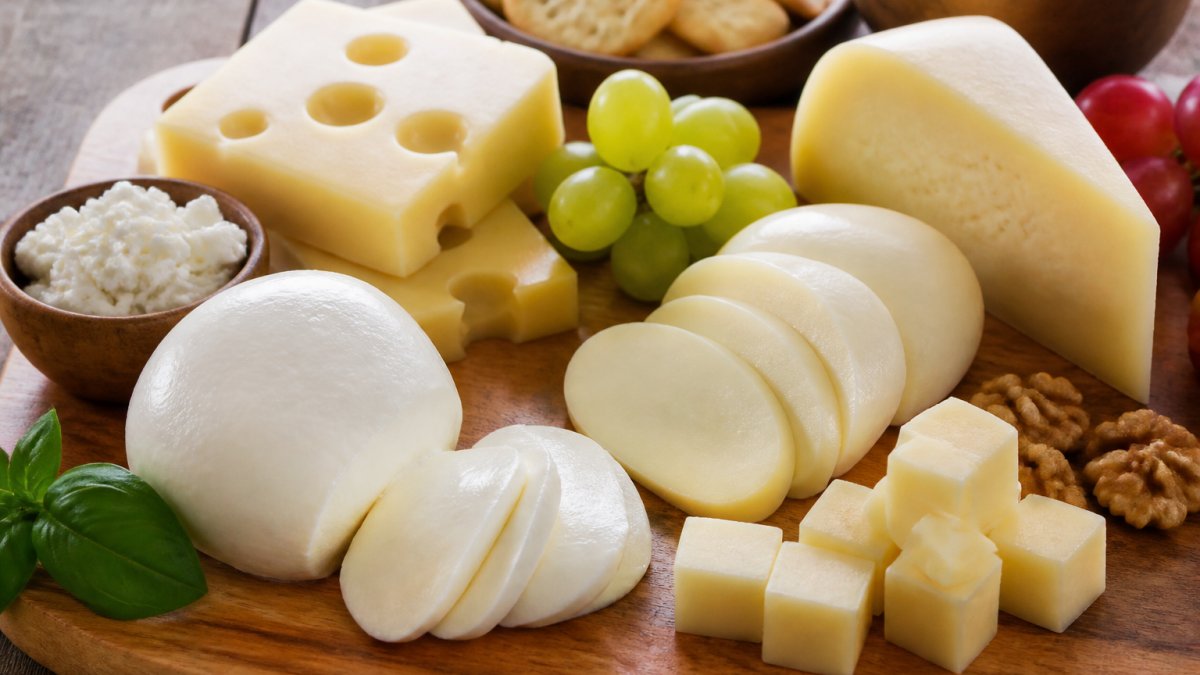
The best mild cheese for beginners is fresh mozzarella, followed by ricotta, mascarpone, Havarti, Colby, Fontina, and Brie. These seven cover the full mild spectrum, from milky and delicate to creamy and softly savory, and each one is easy to find and forgiving to serve.
We rank them by approachability, not prestige. A beginner should be able to taste each one and immediately understand what it offers.
Fresh and Soft: Mozzarella, Ricotta, and Mascarpone
Fresh mozzarella is the single easiest entry point. It's moist, springy, and tastes of milk and cream with a clean finish.
Ricotta is a whey cheese with a light, grainy texture and a gentle sweetness. It works in lasagna, on toast with honey, or straight from the bowl with a spoon.
Mascarpone is the richest of the three, a thick double-cream cheese with a buttery, almost dessert-like flavor. It's the backbone of tiramisu and excellent folded into pasta.
Semi-Soft and Buttery: Havarti, Colby, and Fontina
Havarti is a Danish-style semi-soft cheese with small holes and a buttery, slightly tangy flavor.
Colby is an American original, milder and softer than cheddar with a more open texture. If you've only had sharp cheddar, Colby will feel like a revelation.
Fontina brings a nutty, earthy note while staying firmly in mild territory. It's our go-to for melting over polenta or into a fondue.
Bloomy Rind: Brie and Camembert
Brie and Camembert are the gateway to soft-ripened cheese. Both have a white, bloomy rind and a creamy interior that ranges from chalky when young to runny when ripe. Brie is generally milder and creamier; Camembert is slightly earthier and more aromatic.
Eat the rind. It's edible, and it carries much of the flavor.
Best Soft Cheeses for Beginners: What to Buy First
The best soft cheeses for beginners are fresh mozzarella, ricotta, mascarpone, and Brie, because each delivers a gentle flavor and a texture that's easy to understand on the first bite.
Here's how to choose among them at the counter:
- Fresh mozzarella: Look for a clean, milky smell and a springy feel. Avoid any package with pooled liquid that looks cloudy or sour. Buy it in the smallest container you'll finish within three to four days.
- Ricotta: Check the sell-by date and choose a tub with no separated whey on top. Whole-milk ricotta tastes creamier and less grainy than part-skim, which is worth the trade-off for a first tasting.
- Mascarpone: Pick a tub that's smooth and uniform, with no cracks or watery edges. It's rich, so an 8-ounce tub is plenty for two or three servings.
- Brie: Choose a wheel that gives slightly when pressed in the center but isn't runny under the rind. A strong ammonia smell means it's overripe; a chalky, firm center means it's underripe.
Buy fresh soft cheeses last. They have the shortest shelf life, so pick them up at the end of your shopping trip and refrigerate them promptly.
Ask for a taste at the counter when you can.
Watch the rind on bloomy cheeses. A little brown spotting is normal; an ammonia smell is not.
Mild Cheeses for a Cheese Board: Building Your First Spread
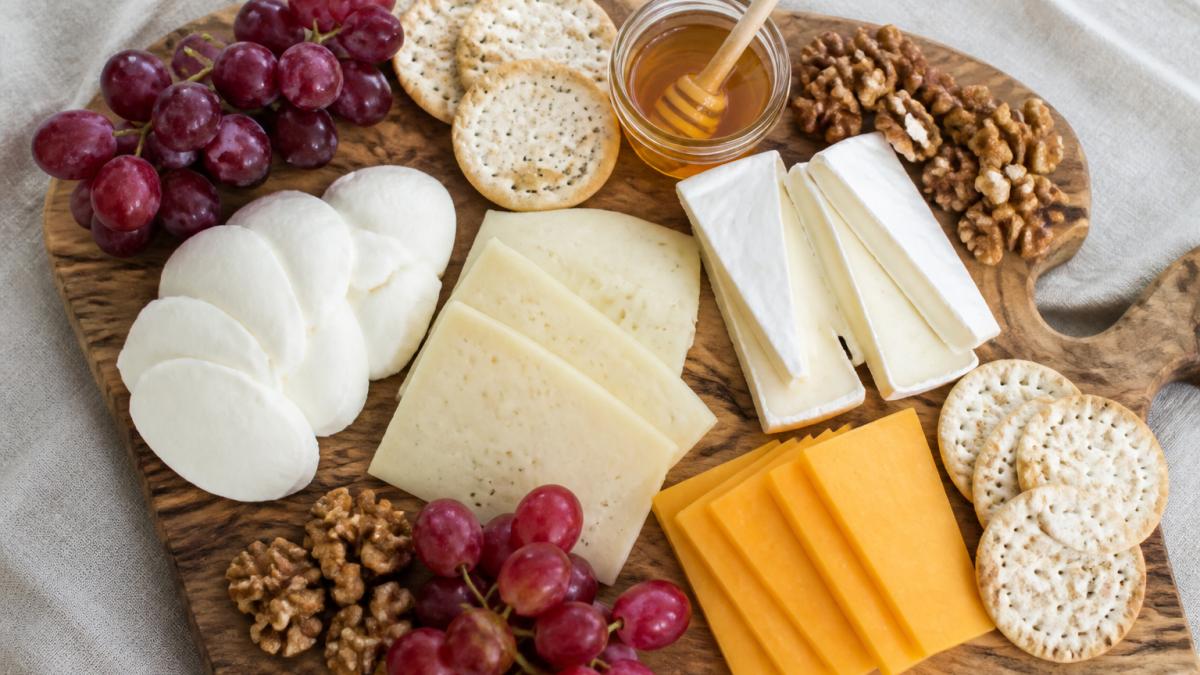
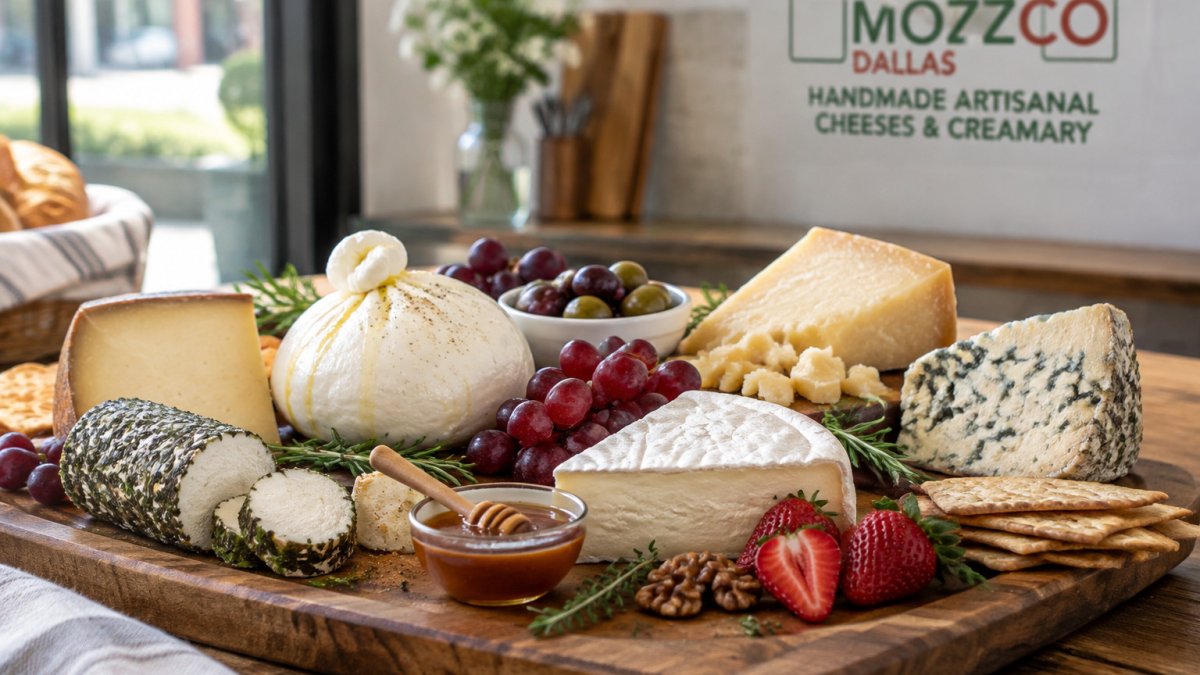
A first cheese board needs three mild cheeses, one soft, one semi-soft, and one fresh, plus two or three accompaniments. That's it. More cheese does not make a better board; contrast does.
Build in this order:
- Anchor with a soft cheese. A wedge of Brie or a round of Camembert gives the board a centerpiece.
- Add a semi-soft for slicing. Havarti or Colby provides structure and a buttery counterpoint.
- Finish with something fresh. Fresh mozzarella or a bowl of ricotta lightens the whole spread.
- Add two accompaniments. Honey, fig jam, grapes, Marcona almonds, or plain crackers. Skip strongly flavored items like hot salami or pickled onions for a first board.
- Leave space. Crowded boards are hard to serve from.
Mild Cheese and Wine Pairings That Work
Mild cheese and wine pairings work best when the wine is as gentle as the cheese. High-tannin reds overwhelm delicate flavors, so start with whites, light reds, and sparkling wines.
Here's what we'd pour with each style:
- Fresh mozzarella: Sauvignon Blanc or a dry Prosecco. The acidity cuts through the milk fat.
- Ricotta and mascarpone: Off-dry Riesling or a light Moscato. Sweetness matches the creaminess.
- Havarti and Colby: Chardonnay or a light Pinot Noir. Both have enough body to stand up to butteriness.
- Fontina: Pinot Grigio or a young Chianti. Nutty notes pair well with earthy reds.
- Brie and Camembert: Champagne or Chardonnay. Bubbles and cream are a classic match.
The old rule that white wine goes with soft cheese and red with hard holds up more often than not. Start there and adjust to taste.
Mild Cheese That Melts Well: Cooking and Serving Tips
The mild cheeses that melt best are mozzarella, Fontina, Havarti, and Colby. Mozzarella stretches; Fontina and Havarti melt smoothly; Colby turns creamy without breaking. Ricotta and mascarpone are better stirred into dishes than melted over heat.
A few practical rules:
- Grate semi-soft cheese cold. It shreds more cleanly straight from the fridge.
- Toss mozzarella with a little olive oil before broiling so it browns instead of drying.
- Add mascarpone off the heat. Boiling can cause it to separate.
- Layer, don't pile. Even layers melt evenly; thick clumps stay cold in the middle.
For a fast weeknight dish, tear fresh mozzarella over roasted vegetables in the last five minutes of cooking. It melts into the pan juices and needs nothing else.
How to Buy and Store Mild Cheese
Buying and storing mild cheese well is mostly about buying small and storing dry.
What to look for on the label:
- Milk type: Cow's milk cheeses tend to be the mildest and most familiar; goat's and sheep's milk cheeses are often tangier, so save them for after you've tried a few cow's milk styles.
- Pasteurization: Most fresh cheeses sold in the U.S. are made from pasteurized milk. If you're pregnant or immunocompromised, choose pasteurized cheeses and check the label rather than assuming.
- Rennet: If vegetarian rennet matters to you, look for it on the ingredient list; many fresh cheeses use microbial rennet, but it's not universal.
- Sell-by date: For fresh cheeses, the sell-by date is a better freshness signal than any other label. Buy the furthest-out date you can find.
Portion sizes that reduce waste:
- Fresh mozzarella: 4 to 8 ounces is enough for two or three servings.
- Ricotta and mascarpone: an 8-ounce tub is a good first purchase.
- Havarti and Colby: a quarter-pound to a half-pound wedge.
- Brie: a quarter-wheel rather than a whole wheel if you're trying it for the first time.
- Wrap in cheese paper or parchment, then loosely in plastic. Tight plastic traps moisture and encourages ammonia.
- Store in the vegetable drawer, the coolest, most humid part of the fridge.
- Keep cheeses separate. Strong cheeses will scent mild ones through the wrapper.
- Freeze only for cooking. Mozzarella and semi-soft cheeses freeze acceptably for melting, but texture suffers for eating fresh.
Check labels for pasteurization if you're pregnant or immunocompromised. Federal guidance on raw milk cheese is available through the U.S. Food and Drug Administration, and it's worth reading before buying fresh cheeses from a farmstead producer.
For more on how handmade cheese is made and what to look for in a fresh wheel, the American Cheese Society publishes guidance on cheese styles and judging standards.
Conclusion
Choosing a first mild cheese is a small decision with a big payoff. Start with fresh mozzarella, add Havarti and Brie, and you'll have a board that works for any gathering. Our handmade cheeses are made in small batches from fresh milk, with more than forty varieties across the mild-to-strong spectrum, so there's a gentle starting point for every palate. Browse our selection and find your first wheel.
Frequently Asked Questions
What are the best mild cheeses for beginners?
Start with fresh mozzarella, ricotta, mascarpone, Havarti, Colby, Fontina, and Brie. These mild cheese varieties have soft, creamy, or buttery flavors without sharpness or blue-veined intensity. Mozzarella and ricotta are the easiest entry points because they are widely available, affordable, and work in everything from salads to pasta. Havarti and Colby add a little more body for snacking, while Brie introduces you to bloomy rind styles without overwhelming your palate.
Which mild cheese melts well for cooking?
Mozzarella, Fontina, Havarti, and Colby are the most reliable mild cheese that melts well. Mozzarella stretches and browns beautifully on pizza and lasagna. Fontina melts smoothly into sauces and gratins. Havarti and Colby melt evenly in grilled cheese and quesadillas. Avoid very fresh cheeses like ricotta and mascarpone for high-heat melting, since they release water and can turn grainy. Shred semi-soft cheeses yourself rather than buying pre-shredded, which contains anti-caking agents that hinder melting.
What should beginners pair with mild cheese?
For mild cheese and wine pairings, choose light whites and soft reds. Mozzarella and ricotta work with Sauvignon Blanc or Pinot Grigio. Havarti and Colby suit Chardonnay or a fruity Rosé. Brie pairs with Champagne or a light Pinot Noir. Beyond wine, serve mild cheese with crusty bread, crackers, apple slices, grapes, honey, and fig jam. These pairings add sweetness and crunch without competing with the gentle flavor of the cheese.
How can you tell if a cheese will taste mild?
Look at the milk type, rind, and age. Fresh cheeses like mozzarella, ricotta, and mascarpone are almost always mild. Cow's milk cheeses tend to be gentler than goat's milk or sheep's milk varieties. A bloomy white rind, as on Brie and Camembert, signals a soft, buttery interior rather than a sharp one. Avoid blue-veined cheeses and anything labeled aged, extra-sharp, or washed-rind when you are starting out. Asking a cheesemonger for a taste before buying is the surest way to confirm mildness.
The hardest part of buying cheese online is trusting that it arrives fresh. We make our cheeses by hand in small batches and ship them with care so they reach you in the condition they left us. Every order is backed by more than four decades of cheesemaking, and our mild varieties are among the most approachable you'll find. Get started with Mozzarella Company and taste the difference handmade makes.