 how-to
How to Keep Cheese Fresh: Storage Guide
Table of Contents
- How to Store Cheese Once Opened
- What to Wrap Cheese In (and What to Avoid)
- How Long Does Cheese Last in the Fridge?
- How to Store Soft Cheese Without Ruining It
- Storage by Cheese Type: Hard, Semi-Hard, Soft, and Fresh
- Freezing Cheese: What Works and What Doesn't
- Troubleshooting Common Cheese Storage Problems
- Conclusion
- Frequently Asked Questions
Last Updated: October 12, 2026
How to Store Cheese Once Opened
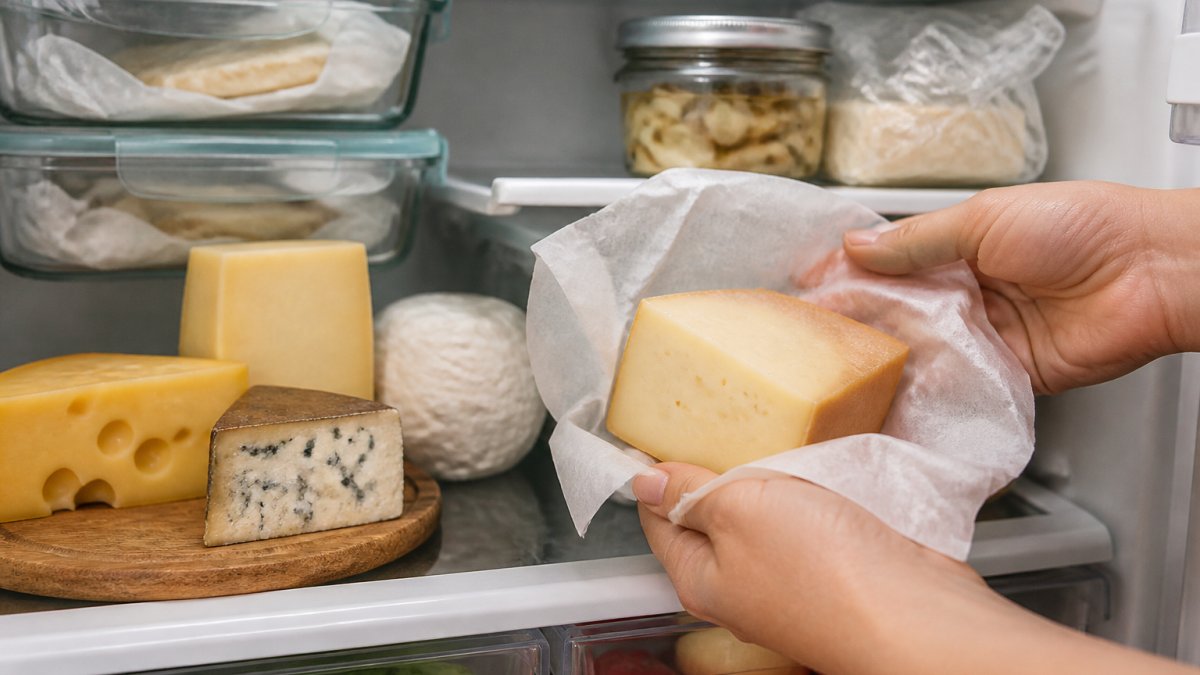
The best way to keep cheese fresh after opening is to rewrap it in breathable paper, tuck it into a loose container, and refrigerate it in the warmest part of the fridge.
Cheese is alive. It keeps ripening, breathing, and losing moisture from the moment you cut into it. Wrap it wrong and you either smother it or dry it out.
Below, we walk through exactly how to store cheese once opened, how long it lasts, and what to do when things go wrong.
Step 1: Rewrap the Cheese
The original wrapper usually fails after opening. Deli paper tears, vacuum seals break, and plastic film traps moisture against the surface.
Rewrap each piece in cheese paper or parchment. Fold it loosely so air can still move. Tight wrapping is the single most common mistake we see.
Step 2: Choose the Right Container
Paper alone dries out over time. Set the wrapped cheese inside a loose container or a partly open plastic bag.
A hard plastic box with the lid cracked works well. So does a zip bag left slightly unsealed. The goal is a middle ground: enough cover to hold humidity, enough airflow to stop condensation.
Step 3: Refrigerate in the Right Spot
Skip the door. The door is the warmest, most temperature-swing spot in the fridge, and every open-and-shut cycle hits your cheese.
Use the cheese drawer or a lower shelf toward the back. Aim for a steady 34-38°F. If your fridge runs cold, the vegetable drawer is a solid backup because it holds moisture without freezing.
What to Wrap Cheese In (and What to Avoid)
Cheese paper is the best wrapper for most cheeses because it breathes while still holding some humidity. Parchment paper is a close second. Wax paper works in a pinch but offers less protection.
Here's the simple breakdown:
| Wrapper | Airflow | Best For | Watch Out For |
|---|---|---|---|
| Cheese paper | Good | Most cheeses | Costs more |
| Parchment paper | Good | Hard and semi-hard | Dries out fast |
| Wax paper | Fair | Short-term storage | Weak barrier |
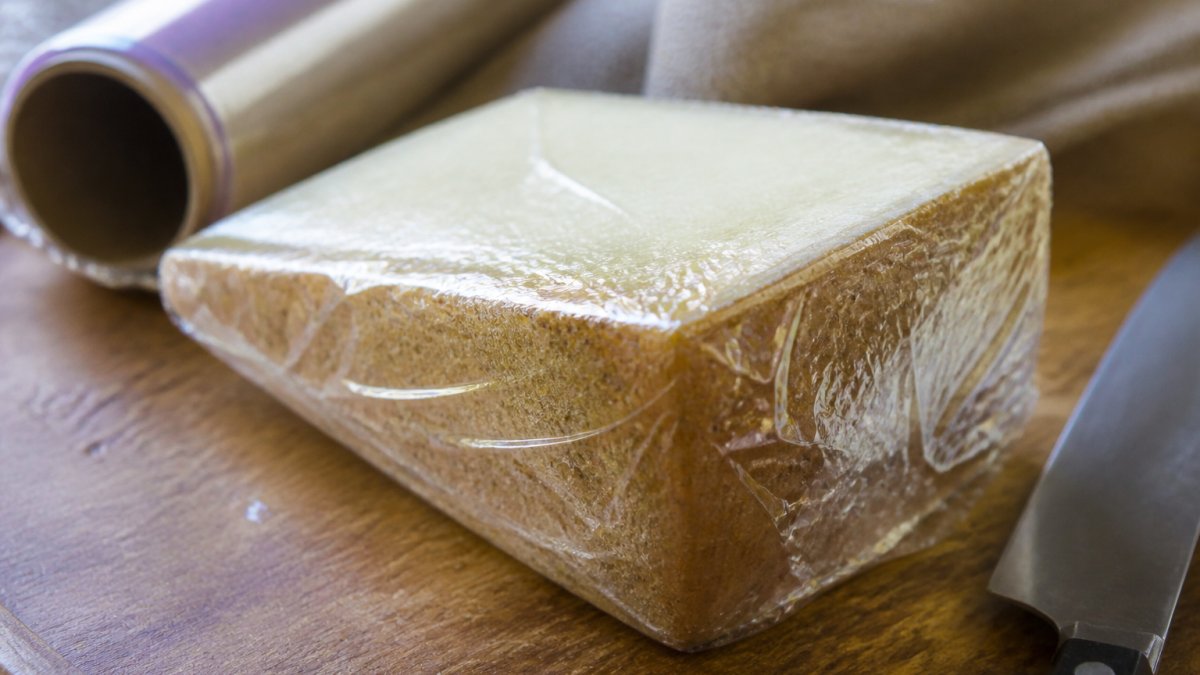
| Plastic wrap | None | Very short trips | Traps moisture, breeds mold |
| Foil | None | Freezing only | Reacts with salty cheese |
Plastic wrap is the trap most people fall into. It seals in moisture, and that moisture feeds mold. Use it only for a day or two, never for long storage.
How Long Does Cheese Last in the Fridge?
Storage life depends on moisture, salt, acidity, and how the cheese was packaged. The wetter and fresher the cheese, the shorter the window. The ranges below assume the cheese was rewrapped in breathable paper, placed in a loose container, and kept at a steady 34-38°F.
| Cheese | Typical fridge life after opening | Notes |
|---|---|---|
| Aged cheddar, parmesan, pecorino | 3-4 weeks | Lower moisture; tolerates more airflow |
| Gouda, swiss, provolone | 2-3 weeks | Check weekly for drying |
| Brie, camembert, triple-cream | 1-2 weeks | Rind is delicate; eat sooner |
| Blue cheese | 2-3 weeks | Salt slows spoilage; keep wrapped |
| Feta in brine | 2-3 weeks | Keep submerged in brine |
| Fresh mozzarella | 2-3 days after opening | Best in its liquid |
| Ricotta, cottage cheese | 5-7 days | Airtight once opened |
| Cream cheese | 1-2 weeks | Keep foil or tub sealed |
| Shredded or grated | 3-5 days after opening | Surface area speeds drying and mold |
| Sliced deli cheese | 5-7 days | Separate slices with parchment |
These are realistic windows, not guarantees. A cheese stored near the door or left out often will fall to the short end.
How to Tell If Cheese Has Gone Bad
Not every spot means the same thing. The rule of thumb: the harder and drier the cheese, the more forgiving it is.
Hard and semi-hard cheese. A little surface mold is common and generally safe to cut away.
Soft, fresh, and shredded cheese. Mold on these is a different story.
Signs to discard any cheese:
- Slimy or sticky surface that does not rinse off
- Sharp ammonia smell, or a smell that lingers after airing
- Pink, orange, or black streaks (these are not the same as blue veins in blue cheese)
- Visible mold on soft, fresh, shredded, or crumbled cheese
- Off flavor that persists after the surface is trimmed
A faint yeasty or mushroomy smell on a rind-ripened cheese is normal. Ammonia is not.
The Two-Hour Rule and Room Temperature
USDA food safety guidance on refrigerated foods advises refrigerating perishable foods within two hours of being at room temperature, and within one hour if the room is above 90°F.
A workable approach:
- Hard and semi-hard: up to two hours out for serving is fine; return to the fridge after.
- Soft and fresh: keep out no more than one hour, then refrigerate.
- If it has been out longer: hard cheese is usually still fine; soft, fresh, shredded, or crumbled cheese should be discarded.
If you want soft cheese at peak flavor, portion out what you will eat, let that portion warm for 30 minutes, and leave the rest refrigerated.
How to Store Soft Cheese Without Ruining It
Soft cheese needs more care than a firm block. Its high moisture makes it spoil faster, and its delicate rind bruises easily.
Keep soft cheese in its original box if it has one.
For fresh cheeses like mozzarella, keep them in their liquid. If you bought it in brine or whey, leave it there and use it within a few days.
Let soft cheese sit at room temperature for about 30 minutes before serving. Cold dulls the flavor, and a short warm-up brings the aroma back.
Storage by Cheese Type: Hard, Semi-Hard, Soft, and Fresh
Broad categories help, but the cheeses people actually buy behave differently. Here is how to store the ones that show up most often in a home fridge.
Cheddar
Aged cheddar is dense and low in moisture. Wrap it in parchment, then a loose zip bag. Keep it in the cheese drawer or a lower shelf. Expect 3-4 weeks. If the surface dries, trim the dry edge and rewrap. Cheddar freezes well for cooking.
Mozzarella
Fresh mozzarella lives in liquid. Keep it in its brine or whey, submerged, and use within 2-3 days of opening. Do not drain it and wrap it in paper; it will dry out and turn rubbery. Low-moisture mozzarella (the block or shredded kind) behaves like a semi-hard cheese: parchment plus a loose bag, 2-3 weeks.
Brie and Camembert
Keep the original box. Wrap the wheel loosely in parchment, set it back in the box, and leave the lid ajar so the rind can breathe. Eat within 1-2 weeks. If the rind smells strongly of ammonia, the wheel is over-ripe. A little white fuzz on the rind is normal; pink or brown streaks are not.
Blue Cheese
Blue cheese is salty and dense, which slows spoilage. Wrap it tightly in parchment or foil, then a zip bag, and keep it away from other cheeses so the blue mold does not migrate. Expect 2-3 weeks. The blue veins are supposed to be there; fuzzy green or black surface mold is not.
Feta
Feta belongs in brine. If you bought it in brine, keep it there and change the brine every week or two with a simple saltwater solution. If you bought it dry, cover it with a light brine in a sealed container. Expect 2-3 weeks. Feta does not freeze well; it turns crumbly and mealy.
Parmesan and Pecorino
These are the most forgiving cheeses in the fridge. Wrap in parchment, then a loose bag, and store in the cheese drawer. They last 3-4 weeks and often longer. A dry, hard rind is normal; trim it before grating. Grate and freeze the last of a wedge rather than letting it dry out.
Cream Cheese and Soft Spreads
Once the foil or tub is opened, keep cream cheese sealed and refrigerated. Use within 1-2 weeks. Do not leave it out for long; its high moisture makes it a fast spoiler.
Shredded, Sliced, and Individually Wrapped Cheese
These formats have more surface area and different packaging needs than a block.
- Shredded: keep in the original bag, squeeze out air, and use within 3-5 days. A paper towel tucked in the bag absorbs excess moisture.
- Sliced: separate slices with parchment so they do not fuse, then wrap the stack loosely. Use within 5-7 days.
- Individually wrapped singles: keep them in the outer package and refrigerate. Once the outer wrap is open, use within a week.
A Quick Reference
| Cheese | Wrapper | Container | Fridge life |
|---|---|---|---|
| Cheddar | Parchment | Loose bag | 3-4 weeks |
| Mozzarella (fresh) | Keep in liquid | Original tub | 2-3 days |
| Brie | Parchment | Original box, lid ajar | 1-2 weeks |
| Blue | Parchment or foil | Sealed bag, isolated | 2-3 weeks |
| Feta | Brine | Sealed container | 2-3 weeks |
| Parmesan | Parchment | Loose bag | 3-4 weeks |
| Cream cheese | Original foil | Sealed tub | 1-2 weeks |
| Shredded | Original bag | Bag with paper towel | 3-5 days |
The pattern holds: the wetter the cheese, the tighter the timeline and the less forgiving the storage.
Freezing Cheese: What Works and What Doesn't
Freezing works well for hard and semi-hard cheese, but it wrecks soft and fresh varieties. The water in soft cheese forms ice crystals that break the texture, leaving it grainy and watery once thawed.
For hard cheese, cut it into smaller blocks, wrap tightly in foil or freezer paper, and freeze for up to two months. Thaw it in the fridge overnight.
Skip the freezer for brie, camembert, and fresh mozzarella. They never come back the same.
Troubleshooting Common Cheese Storage Problems
Most storage problems come down to moisture, temperature, or airflow. Fix the cause and the cheese usually recovers.
- Slimy surface: too much moisture. Rewrap in fresh paper and check your container.
- Cracked, dry edges: too much airflow. Add a loose outer bag.
- Ammonia smell: the cheese is over-ripe. For soft cheese, discard it.
- Surface mold on hard cheese: cut off at least an inch around and below the mold.
- Cheese tastes like the fridge: it absorbed odors. Wrap it better and store it away from onions and leftovers.
Cross-contamination is real. Keep cheese away from strong-smelling foods, and never let raw meat drip near it. A clean cheese drawer solves most of this.
Conclusion
Keeping cheese at its best comes down to a few habits: rewrap it in breathable paper, give it a loose container, and refrigerate it in the right spot. Do that and your cheese holds its flavor far longer.
At Mozzarella Company, we've been making handmade cheese with fresh milk and fine ingredients since 1982. Our award-winning varieties are crafted by hand.
Start with a few of our best sellers, store them right, and taste the difference for yourself. Checkout »
Frequently Asked Questions
What is the best way to store cheese once opened?
Rewrap opened cheese in cheese paper or parchment paper, then place it in a loosely sealed plastic bag or container. This allows the cheese to breathe while protecting it from drying out. Store it in the cheese drawer or vegetable drawer of your refrigerator, where the temperature stays between 34°F and 38°F. Avoid tight plastic wrap, which traps moisture and encourages mold.
How long will cheese stay fresh in the refrigerator?
Hard cheeses like cheddar last 3 to 4 weeks after opening, semi-hard cheeses 2 to 3 weeks, soft cheeses 1 to 2 weeks, and fresh cheeses like mozzarella just 3 to 7 days. Always check for spoilage signs: visible mold (except on hard cheeses where you can cut it off), sour smell, or slimy texture. Discard any cheese that smells or looks off.
What do you wrap cheese in to keep it fresh?
Cheese paper is the gold standard because it lets the cheese breathe while regulating moisture. Parchment paper or wax paper works as a good alternative. Avoid plastic wrap for long-term storage because it traps moisture and creates the perfect environment for mold. If you must use plastic, leave it loose and use it only for short-term storage.
Can you freeze cheese to keep it fresh?
Yes, you can freeze cheese, but the texture changes. Hard cheeses like cheddar and Parmesan freeze best, lasting up to 6 months. Soft and fresh cheeses become crumbly or watery after freezing, so they are better used in cooked dishes rather than eaten raw. Wrap tightly in plastic wrap, then foil, and thaw in the refrigerator overnight before using.