 how-to
Traditional Handmade Cheese Making Process Explained
Table of Contents
- What Makes Traditional Handmade Cheese Making Different
- The Core Cheese Making Steps, From Milk to Wheel
- How Rennet Is Used to Make Cheese
- How to Make Cheese at Home: A Small-Batch Walkthrough
- The Cheese Aging Process and What Happens Inside the Rind
- Troubleshooting by Stage: When Curds, Whey, or Rinds Go Wrong
- Food Safety and Raw-Milk Risk in Handmade Cheese
- Conclusion: Why the Traditional Handmade Cheese Making Process Still Matters
- Frequently Asked Questions
Last Updated: October 14, 2026
What Makes Traditional Handmade Cheese Making Different
Total cheese production hit 14.1 billion pounds in 2023, according to the Agricultural Marketing Resource Center's cheese industry profile.
At Mozzarella Company, we have made cheese by hand since 1982, turning fresh milk into more than forty varieties, one small batch at a time.
Handmade cheese making is the craft of turning milk into cheese through manual steps: warming, culturing, coagulating, cutting, draining, and pressing.
The Core Cheese Making Steps, From Milk to Wheel
Every wheel follows the same basic path. Milk becomes curds and whey, then the curds are drained, pressed, salted, and aged. The steps do not change. What changes is how carefully you control each one.
Selecting and Preparing the Milk
Milk choice shapes everything that follows. Fat, protein, and the animal's breed and season all affect flavor and yield; spring milk from pasture-fed cows tastes different from winter milk, even from the same herd.
Most makers start with pasteurized milk for safety; raw milk can work but carries real risk. We warm the milk gently first, because starter cultures need a friendly temperature to wake up.
Acidifying and Coagulating the Milk
Starter culture is added next. These bacteria eat lactose and produce acid, starting the milk protein curdling; this acidification step sets up the texture of the final cheese.
Then comes coagulation. Rennet or another coagulant is stirred in, and the milk rests until it sets into a soft gel. Zheng describes this stage as one of the key control points in cheese making (Zheng review on cheese processing).
Cutting, Stirring, and Draining the Curds
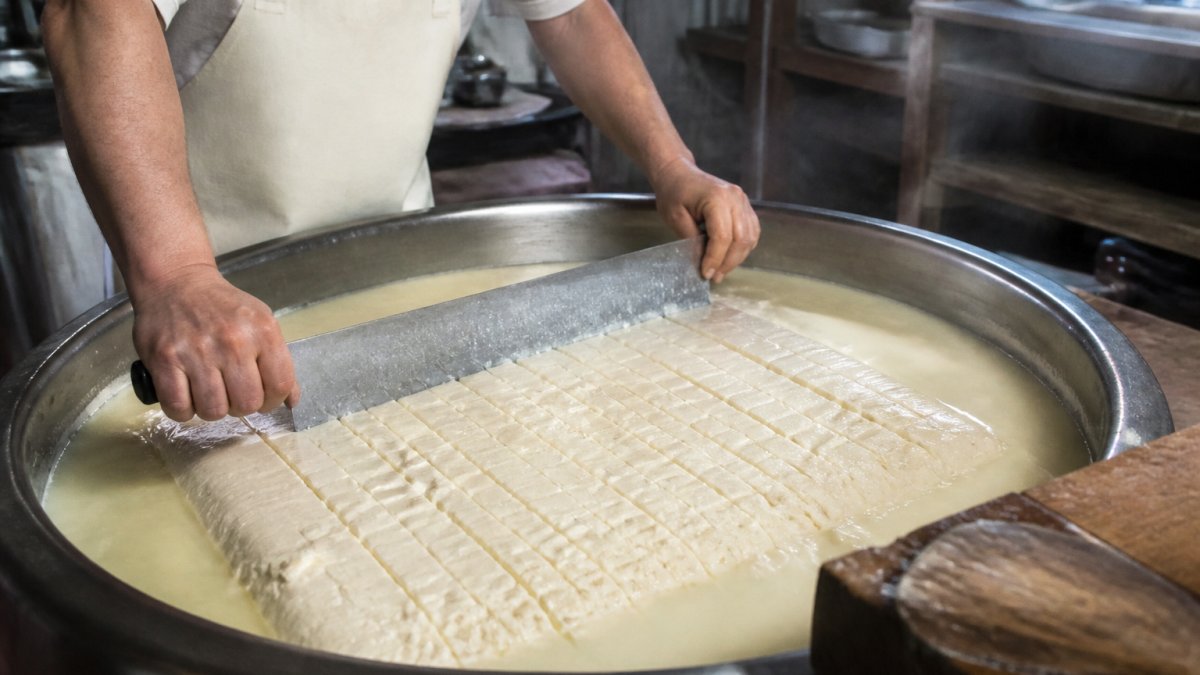
Once the gel is firm, the maker cuts it into cubes. Smaller cuts release more whey and produce a drier cheese. Then the curds are stirred and gently heated, a step called scalding.
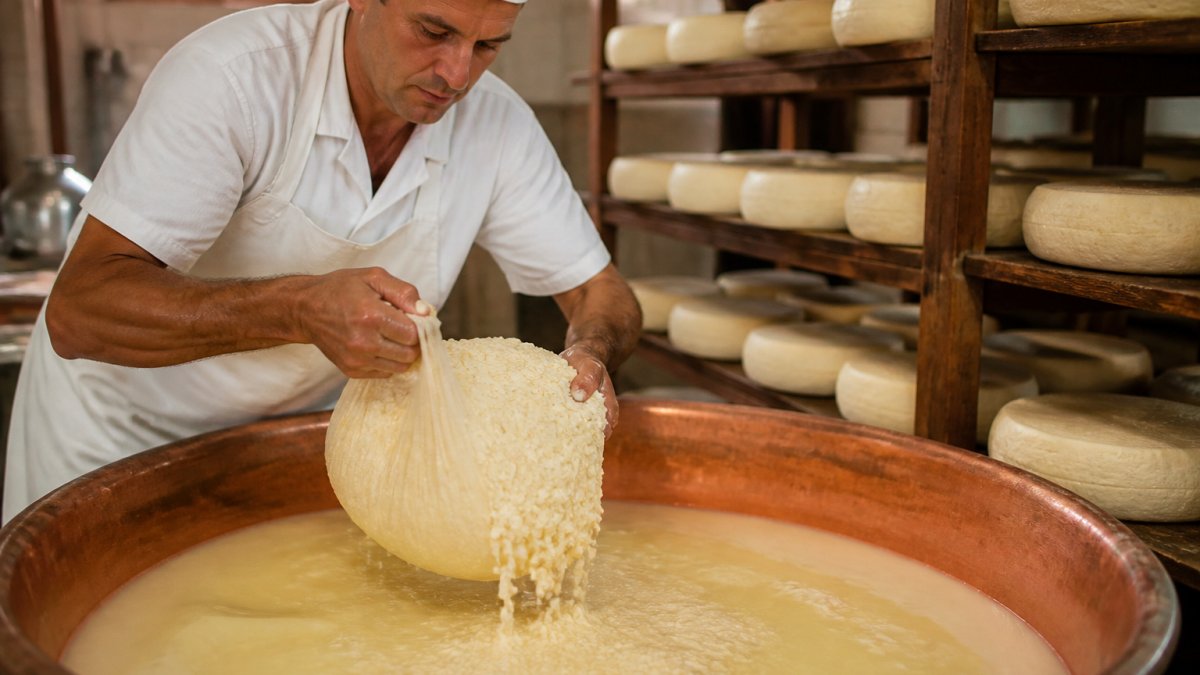
Draining separates the curds from the whey. The curds go into molds, get pressed, and the whey is set aside. Some makers keep it for ricotta or baking.
How Rennet Is Used to Make Cheese
Rennet is the coagulant that turns milk into a firm curd, containing enzymes that make milk proteins clump together. Without it, most aged cheeses would never set.
The maker adds a small amount to warm milk, stirs, then stops; movement at this point ruins the set.
Curd firmness is the real test: press a clean finger or a knife into the surface.
How to Make Cheese at Home: A Small-Batch Walkthrough
Home cheese making follows the same steps as a creamery, just at a smaller scale, but with less margin for error on temperature and timing, so the numbers matter more, not less. Here is a walkthrough for a basic fresh cheese, with the controls that separate a clean set from a rubbery failure.
What You Need Before You Start
- A heavy-bottomed pot large enough to hold a gallon of milk with headroom
- A calibrated thermometer that reads in the 80-110°F range
- A long knife or curd cutter that reaches the bottom of the pot
Sanitize everything that touches milk with a no-rinse acid sanitizer or dilute bleach followed by a clean-water rinse. Milk is a growth medium, and a dirty pot shows up as off-flavors within a day.
Step-by-Step for a Basic Fresh Cheese
- Warm 1 gallon of milk to 86-90°F. Use pasteurized milk for a first batch. Hold the temperature steady; overshooting by 10°F can slow or kill the starter.
- Add starter culture and rest 30-60 minutes. For a mesophilic culture, 1/8 to 1/4 teaspoon of a direct-set starter per gallon is typical. The milk should taste slightly tangy before you add rennet.
- Add diluted rennet, stir gently for 30 seconds, then stop. Use roughly 1/4 tablet or 1/4 teaspoon of liquid rennet per gallon, diluted in 1/4 cup of cool non-chlorinated water. Chlorinated water can weaken rennet.
- Let the milk set until it gives a clean break, usually 30-45 minutes. Press a clean finger or the flat of a knife into the surface. If the curd splits cleanly and whey pools in the gap, it is ready. If it smears, wait 5 more minutes and test again.
- Cut the curd into 1-inch cubes. Cut vertically in one direction, then the other, then run the knife horizontally. Smaller cubes drain more whey and produce a drier, firmer cheese; larger cubes stay moist and creamy.
- Stir and heat slowly, then drain off the whey. Raise the temperature no more than 2°F per minute, stirring gently to keep the cubes intact. For a fresh cheese, stop around 100-105°F. Let the curds settle, then pour into a cheesecloth-lined colander.
- Ladle curds into a mold and press lightly. For a fresh cheese, 5-10 pounds of weight for 30-60 minutes is enough. For a firmer pressed cheese, increase gradually over several hours.
Yield, Timing, and What to Expect
A gallon of whole milk yields roughly 1 to 1.5 pounds of fresh cheese, depending on fat and protein content and how much whey you drain; spring milk from a pasture-fed herd typically gives more than winter milk from the same animals. Expect 2-4 hours for a fresh cheese, plus chilling time.
Common First-Batch Problems
- Curd never sets: rennet may be expired, the milk may be too cold, or the water used to dilute the rennet may be chlorinated.
- Curd is mushy: the culture did not acidify enough, or you cut too early.
- Cheese is rubbery: the curds were heated too fast or stirred too hard.
Keep notes on every batch: milk brand, culture type, rennet dose, temperatures, and times. After three or four batches, patterns emerge, and you can adjust one variable at a time.
Moving to Aged Styles
Once you can make a fresh cheese consistently, try an aged style: the steps are the same, but you press harder, salt more deliberately, and age the wheel for weeks or months under controlled humidity. Developing these complex rinds and sharper flavor profiles provides the perfect foundation for pairing artisan cheese with the nuanced sweetness of raw honey.
The Cheese Aging Process and What Happens Inside the Rind
Aging turns bland fresh curds into complex aged cheese. Over weeks or months, enzymes and cultures break down fats and proteins into smaller flavor- and aroma-carrying compounds, producing a deeper, more varied cheese than anything made in a single day.
What Actually Happens Inside the Wheel
Three things drive ripening at the same time:
- Proteolysis breaks proteins into peptides and amino acids, which softens texture and creates savory, sometimes brothy notes.
- Lipolysis breaks fats into fatty acids, which can read as peppery, buttery, or sharp depending on the cheese.
- Moisture loss concentrates flavor and firms the paste as the wheel sits.
The balance of these three depends on the cheese style, culture, salt level, and aging environment. A soft-ripened cheese like Brie relies on surface mold and fast, outward-in ripening; a hard aged cheese like farmhouse cheddar ripens slowly from the inside out over months.
Temperature, Humidity, and Time
Most aged cheeses fall into a few broad ranges. These are starting points, not rules, and every style has its own target:
- Fresh cheeses: 1-2 weeks at 38-40°F, high humidity, eaten young.
- Soft-ripened and bloomy-rind cheeses: 45-55°F at 85-95% relative humidity for 2-6 weeks.
- Washed-rind cheeses: 50-55°F at 90-95% relative humidity, washed every few days for 4-8 weeks.
A cool, damp cave slows ripening and encourages rind growth. A warmer, drier room speeds moisture loss and can crack the rind. Home makers often use a dedicated refrigerator with a humidity controller, or a wine cooler, to hold these ranges.
Turning, Brushing, and Rind Care
Flip aged wheels every few days during the first month to keep moisture even, prevent the rind from sticking to the shelf, and stop one side from drying faster than the other. After that, once a week is usually enough.
Brush off unwanted mold with a clean, dry brush or a brine-dampened cloth. For a natural rind, a thin coat of white or gray mold is normal and often desirable; for a washed-rind cheese, wipe the surface with brine every 2-3 days to encourage the orange-red bacteria that give those cheeses their characteristic smell and flavor.
A Practical Aging Schedule
- Week 1: Flip daily. Keep humidity high. Watch for whey weeping from the wheel.
- Weeks 2-4: Flip every 2-3 days. Brush or wash the rind as the style requires.
- Months 2-6: Flip weekly. Sample a small plug at 2 months to check progress.
When Aging Goes Wrong
- Cracked rind: humidity is too low, or the wheel is drying too fast. Raise humidity and slow the airflow.
- Bitter flavor: aging temperature is too high, or the culture is producing excess peptides. Lower the temperature.
- Ammonia smell: too much surface mold or too long in a closed container. Air the wheel and reduce humidity slightly.
Troubleshooting by Stage: When Curds, Whey, or Rinds Go Wrong
Most problems trace back to one stage. Fix the stage, and the next batch improves.
| Problem | Likely Stage | Fix |
|---|---|---|
| Curd won't set | Coagulation | Check rennet strength and milk temperature |
| Curd too soft | Acidification | Add more starter or wait longer |
| Whey looks milky | Cutting | Cut more gently, use a sharper knife |
| Bitter flavor | Aging | Lower storage temperature |
| Cracked rind | Ripening | Raise humidity in the aging space |
The pattern is clear. Temperature and timing cause most failures. Keep notes on every batch so you can spot what changed.
Food Safety and Raw-Milk Risk in Handmade Cheese
Raw milk carries bacteria that pasteurization kills. The CDC advises that raw milk and products made from it can cause serious illness (CDC guidance on raw milk). That risk is real for soft, fresh cheeses.
Most commercial handmade cheese in the U.S. is made from pasteurized milk. Federal rules require raw-milk cheeses to be aged at least 60 days before sale.
Clean hands, clean tools, and cold storage matter at every stage. A 2020 American Cheese Society survey found that 81% of producers reported sales declines during the early pandemic, a reminder of how fragile small cheese businesses can be (American Cheese Society producer survey).
Conclusion: Why the Traditional Handmade Cheese Making Process Still Matters
Handmade cheese is slower and less predictable than factory production. That is the point. Every wheel carries the maker's choices about milk, timing, and patience.
If you want cheese made that way, Mozzarella Company has done it by hand since 1982.
Our cheeses are award-winning and recognized across the country for quality. Checkout today and taste the difference real craftsmanship makes.
Frequently Asked Questions
What is the traditional method of making cheese?
Traditional handmade cheese making starts with fresh milk, which is warmed and inoculated with a starter culture to begin acidification. Rennet is added to coagulate the milk into a firm curd, which is then cut, stirred, and drained to separate curds from whey. The curds are salted, molded, pressed, and aged. Each stage, from temperature to timing, is controlled by hand rather than automated equipment, which is what separates handmade cheese making from industrial production.
What does rennet do in cheesemaking?
Rennet is a coagulant that causes milk proteins to bind together and form a solid curd. Without it, milk would acidify but never set firmly enough to cut and drain. How rennet is used to make cheese depends on the style: fresh cheeses may need only a small amount and a short set, while aged wheels require a firmer curd that holds up through pressing and months of aging. Temperature and dose both affect how quickly coagulation happens.
How long does handmade cheese take to make?
The active make, from warming milk to pressing curds, takes anywhere from two hours for a fresh cheese to most of a day for a pressed wheel. The cheese aging process adds far more time: fresh cheeses are ready in days, while aged varieties rest for months. A 2021 review led by X. Zheng describes how biochemical changes during production and aging shape the final result, which is why time at each stage is a deliberate variable, not just a waiting period.
How is handmade cheese different from factory-made cheese?
Handmade cheese making relies on the maker's judgment at every stage: testing curd firmness by feel, adjusting temperature by eye, and deciding when to cut or drain based on the milk in front of them. Factory production standardizes those decisions with automated equipment and uniform inputs. The trade-off is consistency versus nuance. Handmade batches vary slightly, and that variation is often what gives traditional regional cheeses their character and depth of flavor.