 blog
What Are the 7 Cheeses for a Gourmet Cheese Plate?
Last Updated: November 8, 2026
Quick Summary
A gourmet cheese plate works best with seven cheeses, one for each role: fresh mozzarella, Brie or Camembert, Havarti or Fontina, Gouda or Manchego, aged cheddar, Parmesan or Gruyère, and blue cheese. Pick one cheese per role and arrange them mild to bold so no flavor repeats.
- Seven is a ceiling, not a requirement; one well-chosen cheese can carry a small table.
- Plan on three to four ounces of cheese per person for a full seven-cheese plate.
- Buy the mild cheeses slightly larger so bold ones don't overwhelm the plate.
- Take cheese out of the fridge 30 to 60 minutes before serving.
- Don't place blue cheese next to fresh mozzarella; keep a gap and separate knives.
Table of Contents
- Why Seven Cheeses Make a Balanced Gourmet Cheese Plate
- The 7 Cheeses, Numbered
- 1. Fresh Mozzarella (Soft, Mild)
- 2. Brie or Camembert (Soft-Ripened, Creamy)
- 3. Havarti or Fontina (Semi-Soft, Buttery)
- 4. Gouda or Manchego (Semi-Hard, Nutty)
- 5. Aged Cheddar (Hard, Sharp)
- 6. Parmesan or Gruyère (Hard, Crystalline)
- 7. Blue Cheese (Bold, Crumbly)
- How the Seven Work Together
- How Much of Each to Buy
- Simple Cheese Platter Ideas for Small Gatherings
- Best Cheese Board Combinations: Pairings That Work
- The Best Hard Cheese for a Charcuterie Board
- How Much Cheese to Buy, Serve, and Arrange
- Build Your Plate with Handmade Cheese from Our Dallas Shop
- Frequently Asked Questions
Why Seven Cheeses Make a Balanced Gourmet Cheese Plate
Seven is the number that covers every role on a gourmet cheese plate without crowding it. You get one soft, one creamy, one buttery, one nutty, one sharp, one crystalline, and one bold.
At Mozzarella Company, we've been making handmade cheese in Dallas since 1982.
Here's the honest part most guides skip: seven is a ceiling, not a requirement. One well-chosen cheese can carry a small table.
The Framework: One Cheese per Role
The framework is simple. Each cheese earns its spot by doing a job no other cheese on the plate does.
- Fresh and soft: cools the palate
- Soft-ripened: brings creaminess
- Semi-soft: adds butteriness
- Semi-hard: brings nuttiness
- Hard sharp: cuts through richness
- Hard crystalline: adds crunch and salt
- Blue: delivers the bold hit
Pick one cheese per role and you cannot build a boring plate. Skip a role and you'll feel the gap.
If you want the full step-by-step assembly, see our guide on how to build a cheese board that wows your guests.
The 7 Cheeses, Numbered
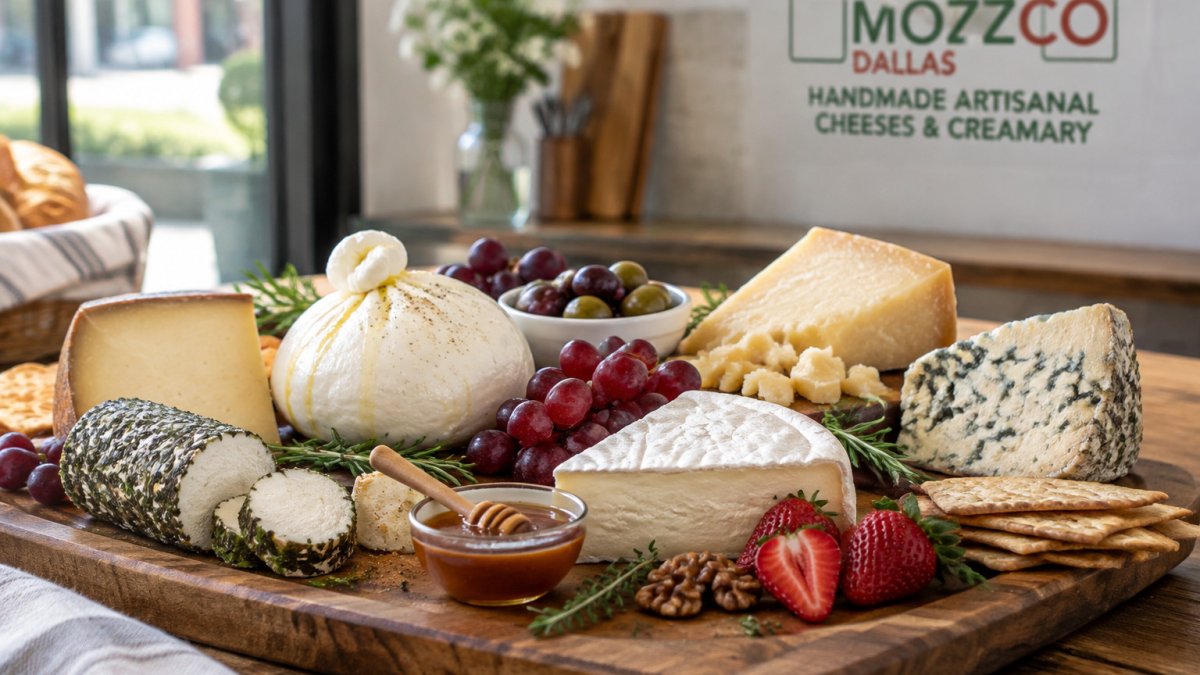
Here's the list, in the order we'd arrange it. Start mild, end bold. Each cheese earns its spot by doing a job no other cheese on the plate does, and we've noted the role, the milk, and what to pair with it so you can shop and serve without guesswork.
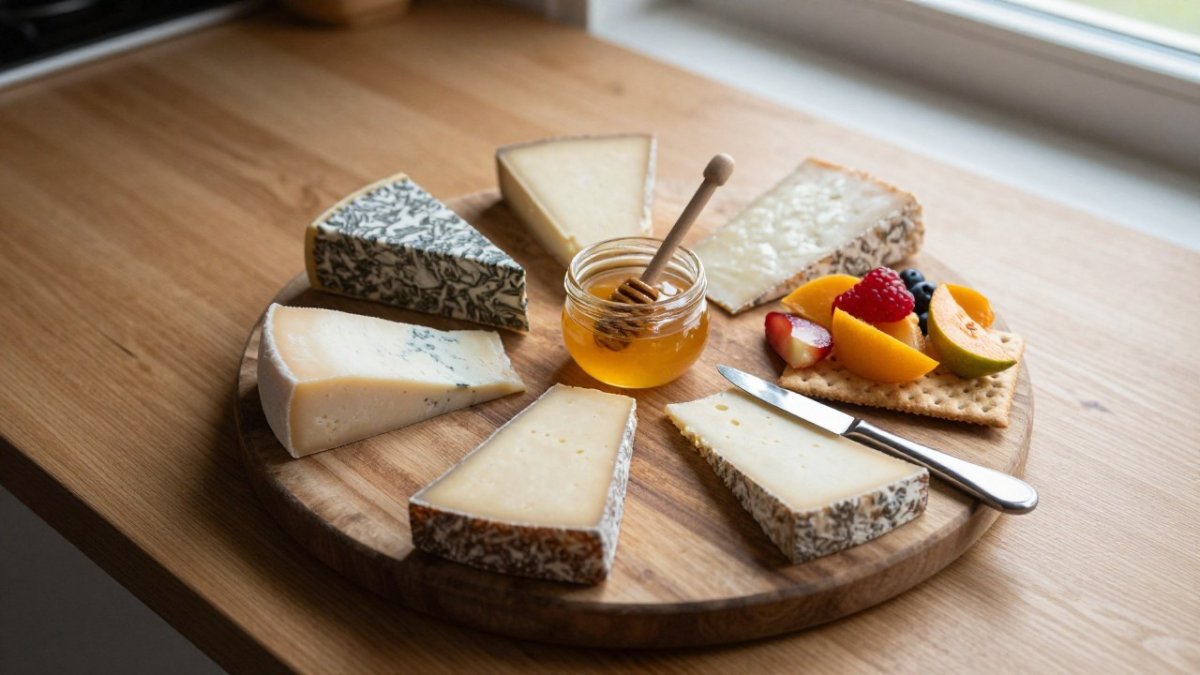
1. Fresh Mozzarella (Soft, Mild)
Fresh mozzarella is the gentle opener. It's milky, soft, and mild enough that nobody flinches. Tear it rather than slice it, torn edges hold oil and salt better. Serve it with tomatoes, olive oil, and a crack of pepper. Buy it close to the day you serve it; fresh cheese doesn't wait around. Pair with basil, crusty bread, and a light drizzle of olive oil.
2. Brie or Camembert (Soft-Ripened, Creamy)
Brie and Camembert bring the creamy texture that makes a plate feel generous. Let them sit at room temperature before serving so the inside runs. Camembert is the earthier of the two; Brie is milder and more buttery. Either works. Pair with honey, figs, almonds, and apple slices.
3. Havarti or Fontina (Semi-Soft, Buttery)
Havarti and Fontina are the crowd-pleasers. Both are semi-soft, mild, and easy to slice. Havarti is softer and a little tangier; Fontina is nuttier and melts beautifully. Neither will offend anyone at the table. Pair with prosciutto, grapes, and crackers.
4. Gouda or Manchego (Semi-Hard, Nutty)
Gouda and Manchego carry the nutty flavor role. Gouda is caramel-sweet; Manchego is a sheep's milk cheese with a firm, slightly briny bite. Both slice clean and hold up on a board for hours. Pair with chorizo, marcona almonds, and quince paste.
5. Aged Cheddar (Hard, Sharp)
Aged cheddar is the sharp flavor on the plate. It wakes up the palate after all that butter and cream. Look for something aged at least a year. Pair with dark chocolate, apple, and whole-grain crackers.
6. Parmesan or Gruyère (Hard, Crystalline)
Parmesan and Gruyère deliver the firm texture and salty crunch. Parmesan is the drier, more crystalline choice; Gruyère is nuttier and a little sweeter. Break Parmesan into rough chunks instead of grating it, the pieces are easier to pick up. Pair with honey, walnuts, and dried fruit.
7. Blue Cheese (Bold, Crumbly)
Blue cheese is the bold finish. It's crumbly, salty, and strong enough to end the plate on a high note. Not everyone loves blue, so serve it in a small wedge so it doesn't take over. Our own Deep Ellum Blue is a good entry point for people who think they don't like blue cheese. Pair with honey, pears, walnuts, and dark chocolate.
How the Seven Work Together
The framework is simple: one cheese per role, and no two cheeses should duplicate milk type, texture, and intensity all at once. Fresh mozzarella and Brie are both soft, but one is fresh and mild while the other is ripened and creamy, that's a contrast, not a repeat. Aged cheddar and Parmesan are both hard, but one is sharp and the other is crystalline and salty.
How Much of Each to Buy
For a full seven-cheese plate, plan on three to four ounces of cheese per person total, which works out to roughly half an ounce of each cheese per guest, about two to three bites. For a smaller three-cheese plate, plan on four to five ounces per person. A simple shopping checklist: one fresh cheese, one soft-ripened, one semi-soft, one semi-hard, one hard sharp, one hard crystalline, and one blue, plus honey, fruit, nuts, and crackers. Watch out: if you buy equal wedges of all seven, the bold cheeses can overwhelm the mild ones, so buy the mild cheeses slightly larger.
Here is the full lineup at a glance, with the role each cheese plays and what we pair with it.
| Cheese | Role | Milk | Pair with |
|---|---|---|---|
| Fresh Mozzarella | Soft, mild opener | Not stated | Tomatoes, basil, olive oil, crusty bread |
| Brie or Camembert | Soft-ripened, creamy | Not stated | Honey, figs, almonds, apple slices |
| Havarti or Fontina | Semi-soft, buttery | Not stated | Prosciutto, grapes, crackers |
| Gouda or Manchego | Semi-hard, nutty | Manchego is sheep's milk | Chorizo, marcona almonds, quince paste |
| Aged Cheddar | Hard, sharp | Not stated | Dark chocolate, apple, whole-grain crackers |
| Parmesan or Gruyère | Hard, crystalline | Not stated | Honey, walnuts, dried fruit |
| Blue Cheese | Bold, crumbly | Not stated | Honey, pears, walnuts, dark chocolate |
Simple Cheese Platter Ideas for Small Gatherings
A small gathering doesn't need seven cheeses. Scale the framework down and keep the roles.
For four to six people, pick three cheeses from the list. One soft, one semi-hard, one bold. Add crackers, fruit, and honey, and you're done.
A few platter ideas that work:
- The easy trio: fresh mozzarella, aged cheddar, blue cheese
- The crowd-pleaser: Brie, Havarti, Gouda
- The bold table: Manchego, Parmesan, blue cheese
- The soft table: mozzarella, Brie, Fontina
Keep the plate small and refill it. A crowded board looks tired after an hour.
Best Cheese Board Combinations: Pairings That Work
Good pairings follow one rule: match intensity with intensity. Mild cheese with mild partners; bold cheese with bold partners.
Here's what we'd put with each cheese, and why:
- Fresh mozzarella: tomatoes, basil, olive oil, crusty bread. The mild, milky flavor needs acidic, fresh partners rather than sweet or salty ones.
- Brie or Camembert: honey, figs, almonds, apple slices. The creamy texture wants a sweet, soft partner and a little crunch for contrast.
- Havarti or Fontina: prosciutto, grapes, crackers. The buttery, mild cheese balances salty cured meat and sweet fruit.
- Gouda or Manchego: chorizo, marcona almonds, quince paste. The nutty, caramel notes pair with salty meat and a sweet-tart paste.
- Aged cheddar: dark chocolate, apple, whole-grain crackers. The sharpness cuts through rich chocolate and stands up to crisp apple.
- Parmesan or Gruyère: honey, walnuts, dried fruit. The crystalline salt needs a sweet counterpoint and a nutty crunch.
- Blue cheese: honey, pears, walnuts, dark chocolate. The bold, salty blue needs sweet partners to keep it from taking over.
Honey and fruit do most of the work. Chocolate belongs with the sharp and bold cheeses, not the soft ones, a soft Brie with dark chocolate turns muddy, while sharp cheddar with dark chocolate sings.
For deeper guidance on matching cheese with wine, our cheese and wine pairing guide walks through it step by step.
The Best Hard Cheese for a Charcuterie Board
The best hard cheeses for a charcuterie board are aged cheddar, Parmesan, Gruyère, and Manchego. Each brings a firm texture that holds up next to cured meat without turning greasy.
Hard cheese is the backbone of a charcuterie board. It slices clean, sits out for hours, and stands up to salty meat.
A few rules we follow:
- Cut hard cheese into thin planks, not cubes
- Leave the rind on for grip and looks
- Pair sharp cheddar with salami, and nutty Gruyère with prosciutto
- Keep Parmesan in rough chunks so guests can break pieces off
If you want to browse aged and grating cheeses for your board, our hard cheese selection covers the options we make here in Dallas.
How Much Cheese to Buy, Serve, and Arrange
Buy about three to four ounces of cheese per person for a full plate with seven cheeses. That's roughly two to three bites of each cheese per guest.
For a smaller three-cheese plate, plan on four to five ounces per person. People eat more when there are fewer choices.
Serving and arranging tips:
- Take cheese out of the fridge 30 to 60 minutes before serving
- Arrange from mild to bold, left to right
- Give each cheese its own knife
- Leave space between cheeses so guests can cut cleanly
- Label the bold ones, especially blue
Watch out: cold cheese tastes like nothing. If you skip the warm-up time, even a great cheese will read as bland.
Build Your Plate with Handmade Cheese from Our Dallas Shop
The list is a starting point. The real plate comes together when you taste as you go.
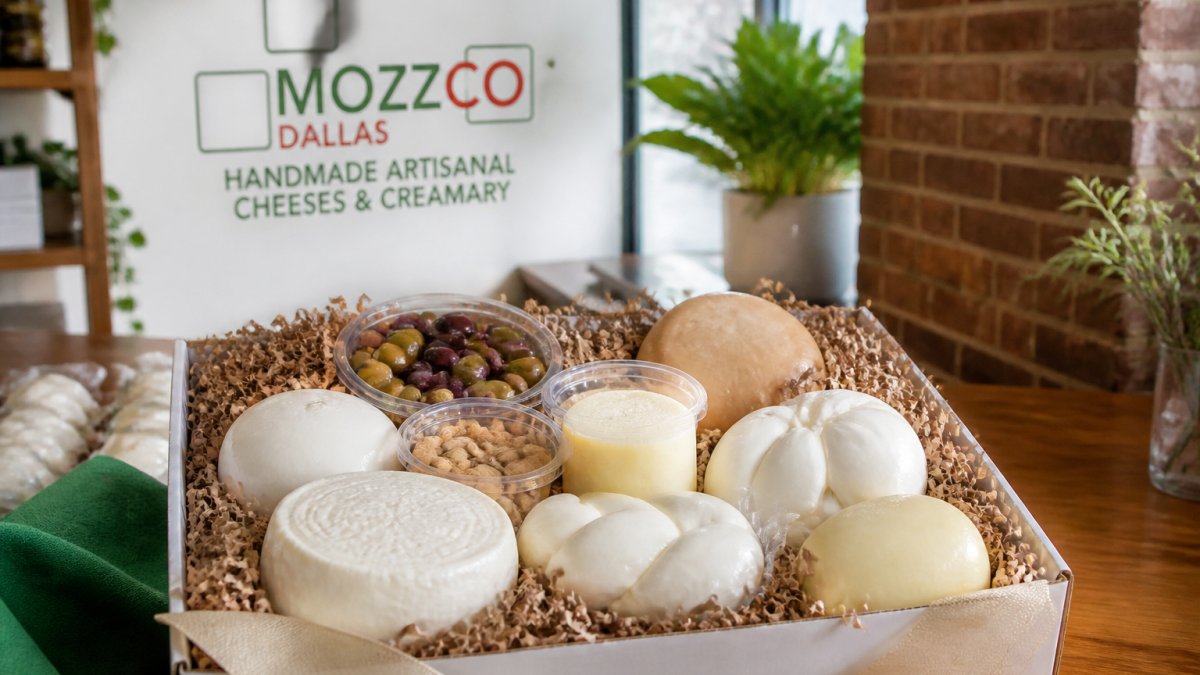
We make fresh mozzarella, burrata, caciotta, goat cheese, and more by hand in our Dallas factory, and we've been at it since 1982. You can shop our cheese gifts and selections online for a ready-made assortment, or stop by and build your own.
If you'd rather learn the craft yourself, we teach cheese-making classes at the factory. Public classes run on Saturdays, and private group classes run on Wednesdays.
Seven cheeses sounds like a lot until you see the roles. Start with the framework, buy a little more than you think you need, and let the plate warm up before guests arrive. That's the whole secret.
Get started with Mozzarella Company and build a plate your guests will remember. Shop our handmade cheeses, browse gift baskets, or book a class and learn to make mozzarella yourself.
Frequently Asked Questions
How many cheeses should you put on a cheese plate?
Seven is a comfortable number for a gourmet cheese plate because it lets you cover soft, semi-soft, semi-hard, hard, and blue styles without overwhelming the board or your guests. You can go smaller, though. Three well-chosen cheeses, or even one really good one, can carry a plate if the accompaniments are thoughtful. The key is variety in texture, milk type, and flavor strength rather than sheer count.
What are the best hard cheeses for a charcuterie board?
Aged cheddar, Parmesan, Gruyère, and Manchego are the best hard cheese for charcuterie board spreads because they hold their shape, slice cleanly, and stand up to cured meats. Aged cheddar brings sharpness, Parmesan adds a crystalline crunch, Gruyère gives a nutty sweetness, and Manchego offers a firm, slightly tangy bite. Pick two hard cheeses for a seven-cheese plate so you get contrast without crowding the board.
What accompaniments go well with a gourmet cheese plate?
Honey, fig jam, fresh fruit like grapes and sliced apples, toasted nuts, and both crackers and crusty bread are reliable choices. Chocolate, especially dark, pairs well with blue cheese and aged cheddar. Keep the accompaniments simple so the cheese stays the focus. Arrange them in small bowls or clusters between the cheeses, and offer a separate knife for each cheese so flavors stay clean.
How do you arrange cheeses on a cheese plate?
Place the cheeses first, spacing them evenly around the board, then fill the gaps with accompaniments. Put soft cheeses near the edge where they are easy to spread, and pre-cut hard cheeses into slices or wedges so guests can serve themselves. Vary the shapes: wedges, rounds, and crumbles. Add a small label for each cheese if you are serving a crowd, and let everything sit at room temperature for about 30 minutes before serving.