 How-to
7 Rules to Order Handmade Cheese Online Safely
Last Updated: November 10, 2026
Quick Summary
Order handmade cheese online safely by checking that the shop ships in insulated packaging with a properly sized cold source, choosing a short transit window, and inspecting the box the moment it arrives. Get the cheese into the fridge fast, wrap it loosely, and eat soft cheeses first.
- Gel packs should scale with box volume and expected transit days, not be a single thin pack.
- A shop shipping the same box in January and July isn't sizing its cold chain to conditions.
- Open the box as soon as it lands and check the cold source before anything else.
- If the cheese itself is warm or the seal is compromised, call the shop rather than tasting it.
- Start with two or three cheeses covering different styles rather than a giant assortment.
Table of Contents
- Why Ordering Handmade Cheese Online Needs a Little Know-How
- Rule 1: Check How the Cheese Is Packed for Shipping
- Rule 2: Understand Transit Time and Delivery Windows
- Rule 3: Inspect Your Order the Moment It Arrives
- How to Store Handmade Cheese After It Lands on Your Doorstep
- Handmade Cheese Gift Baskets: What to Look For Before You Send One
- Pick Your First Order and Get It Shipped
- Frequently Asked Questions
Why Ordering Handmade Cheese Online Needs a Little Know-How
Ordering handmade cheese online safely comes down to three things: how the cheese is packed, how long it spends in transit, and what you do in the first ten minutes after the box lands. Get those right and you get cheese that tastes like it left our counter yesterday.
At Mozzarella Company, we've been making cheese by hand in Dallas since 1982. Here's what we've learned about getting it there in good shape.
Cheese is a living food. It doesn't stop changing once it's wrapped. Warmth speeds that change up, and rough handling bruises soft varieties. The good news: safe delivery is mostly about planning, not luck. Below, we'll walk through seven rules that cover the whole trip, from the click to the first slice.
Rule 1: Check How the Cheese Is Packed for Shipping
Ask one question before you buy: does this shop ship perishable food in insulated packaging with a cold source, and can it tell you how that system is sized? If the answer isn't clear on the product page, ask customer support. A shop that ships cheese regularly will answer without hesitation.
Temperature-controlled shipping is a system, not a single box. The pieces that matter in general:
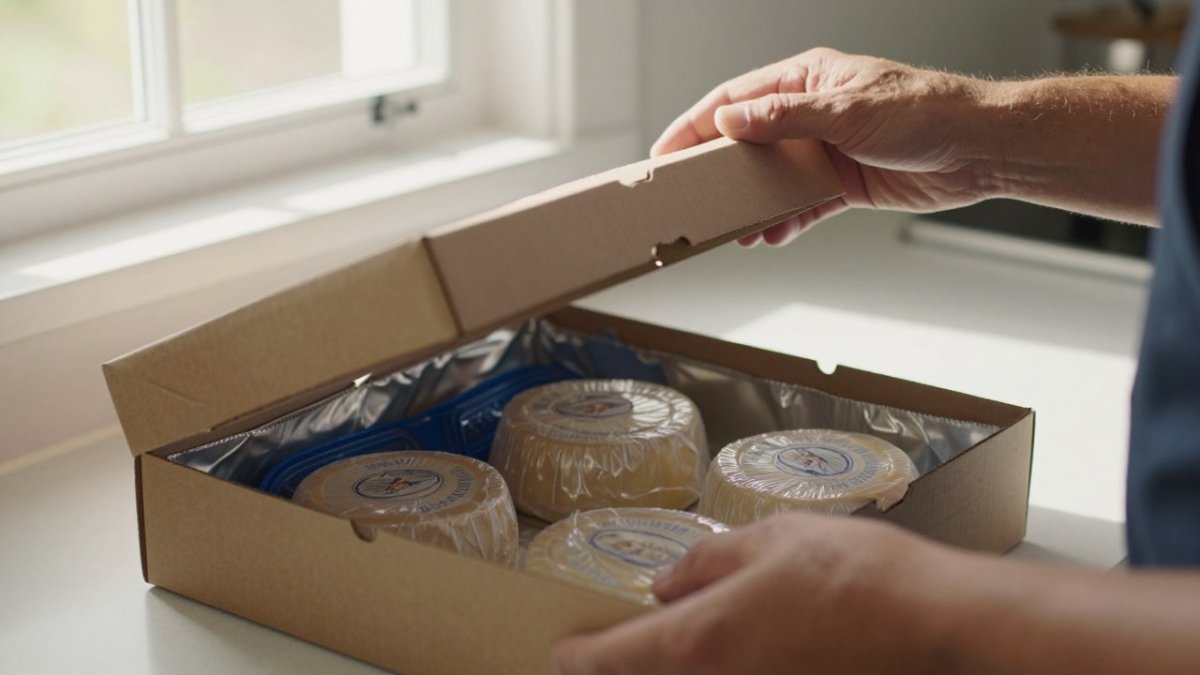
- Thermal insulation. Molded foam or foil-lined bubble liners are the common choices. Foil liners are lighter and recyclable; foam holds temperature longer on slow routes. The right pick depends on transit time, not preference.
- Cold source. Gel packs are standard because they release cold slowly and don't leak like loose ice. The number and size of packs should scale with box volume and expected transit days, a small box with one thin pack is fine for a two-day run and risky for a four-day one.
- Right-sized packaging. Empty space is dead air that warm outside air has to fight through. Cheese should sit snug, with cushioning so soft varieties don't bruise.
- A barrier between cheese and cold source. Direct contact can freeze the surface of fresh mozzarella or burrata. Good packers wrap the cold source or leave a buffer layer.
Seasonal packing is the tell. A shop that ships the same box in January and July isn't sizing its cold chain to conditions. In warm months, expect more cold source, tighter packing, and often a shorter promised transit window. In cool months, the same shop may ship a leaner box because the ambient temperature is doing part of the work.
If you want the full picture on packing and arrival, our guide on how to send handmade cheese gifts that arrive fresh walks through it step by step.
Here's what a well-packed cheese shipment should include, and why each piece matters.
| Packing element | Common choices | Why it matters |
|---|---|---|
| Thermal insulation | Molded foam or foil-lined bubble liners | Foil is lighter and recyclable; foam holds temperature longer |
| Cold source | Gel packs, sized to box volume and transit days | Releases cold slowly and doesn't leak like loose ice |
| Packaging fit | Cheese sits snug with cushioning | Empty space is dead air; soft varieties can bruise |
| Barrier layer | Cold source wrapped or a buffer layer | Direct contact can freeze fresh mozzarella or burrata |
| Seasonal packing | More cold source and tighter packing in warm months | A shop shipping the same box year-round isn't sizing its cold chain |
Rule 2: Understand Transit Time and Delivery Windows
Short transit is one of the best protections for perishable food. Shorter routes generally arrive in better shape than longer ones.
So read the shipping details before checkout. Look for ship days, transit time, and a delivery window you can plan around.
A common mistake is ordering on a Thursday afternoon and expecting a Friday arrival. That timeline rarely works for perishable food.
If you're new to buying this way, our buyer's guide to small-batch cheese online covers how to read delivery windows and pick a ship date that works.
Rule 3: Inspect Your Order the Moment It Arrives
Open the box as soon as it lands on your counter. Don't let it sit in the hallway while you finish a call. The first ten minutes tell you whether the cold chain held.
Here's the inspection sequence we'd use:
- Check the cold source first. Gel packs that are still partly frozen or distinctly cold mean the box did its job.
- Feel the cheese itself. It should feel cool to the touch.
- Look at the seal. Packaging should be tight and intact.
- Smell the package. A clean dairy smell is normal. Ammonia or sour notes are not.
- Photograph anything off, including the cold source and the packing materials, then contact the shop the same day.
How to read a warm box. If the cold source is spent but the cheese is still cool and the seal is intact, most fresh cheeses are fine, get them into the fridge and eat the soft ones first. If the cheese itself is warm to the touch, the seal is compromised, or there's an off smell, treat it as a food-safety question and don't taste it to find out. That's the moment to call the shop, not to improvise.
Food safety matters here. In 2026, the CDC issued a food safety alert about an E. coli outbreak tied to a brand of raw cheddar cheese (CDC food safety alert). Most shipped cheese is fine, but inspecting on arrival is how you catch a problem early.
How to Store Handmade Cheese After It Lands on Your Doorstep
Get the cheese into the fridge fast, then give it room to breathe. Here's how to store handmade cheese so it keeps its texture and flavor:
- Keep it cold. The refrigerator is the default home for fresh and soft cheeses.
- Wrap it loosely. Cheese needs a little air. Tight plastic traps moisture and can turn the surface slimy.
- Use the crisper drawer. It's the coolest, most stable spot in most fridges.
- Eat soft cheeses first. Fresh mozzarella and burrata are best in the first few days.
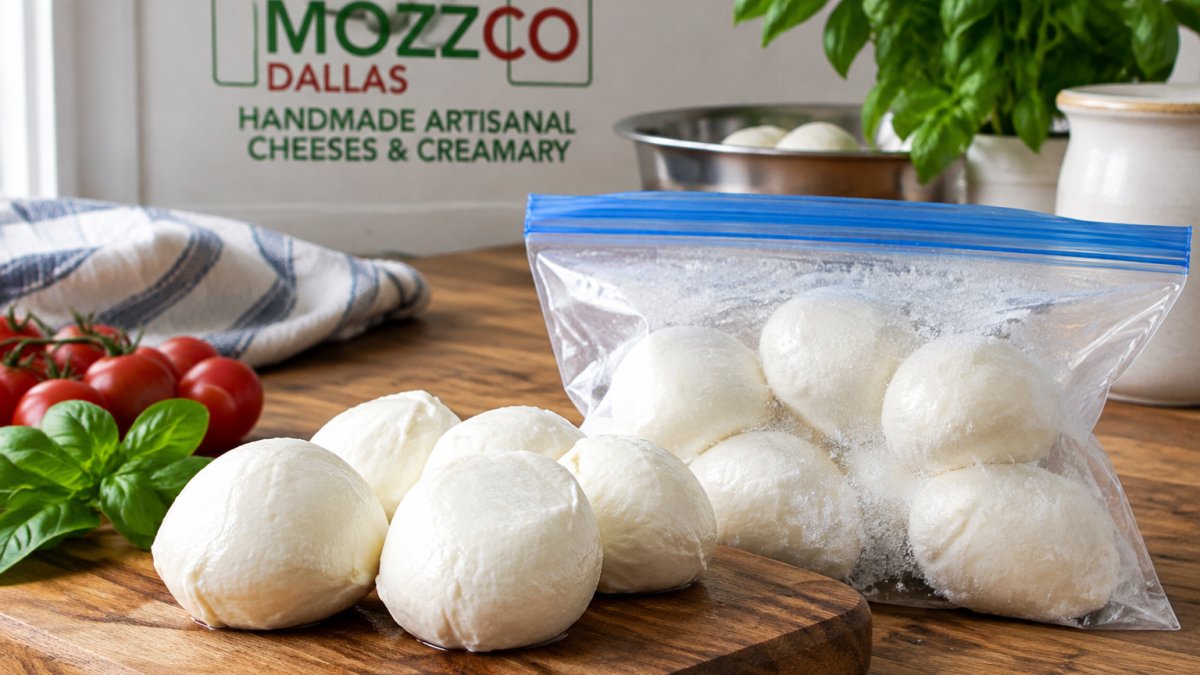
- Freeze with care. Fresh mozzarella changes texture when frozen. Our post on whether you can freeze fresh mozzarella balls explains what to expect.
Spoilage signs to know: ammonia smell, pink or gray patches, or a slimy rind. When in doubt, throw it out.
Handmade Cheese Gift Baskets: What to Look For Before You Send One
A good gift basket is built for the trip, not just for the photo. Before you send one, check three things: the shipping method, the mix of cheeses, and whether the recipient will be home.
What separates a strong basket from a weak one:
- A curated collection with a clear theme, not a random pile
- A mix of hard and soft cheeses, since hard cheese travels better
Handmade cheese gift baskets work best when the recipient knows they're coming. A surprise box that sits on a porch for six hours in July is a wasted gift.
Wondering if the spend is worth it? Our take on whether an artisan cheese gift set is worth it for delivery breaks down the trade-offs.
Pick Your First Order and Get It Shipped
Start small and pick a few best sellers rather than a giant assortment. You'll learn what you like, and you'll waste less if something isn't to your taste.
A simple first order:
- Choose two or three cheeses that cover different styles.
- Check the ship date and pick a day you'll be home.
- Confirm the packaging includes a cold source.
- Open and inspect the box the day it arrives.
- Store it right and eat the soft cheeses first.
If you'd rather hand the choice to someone who does this daily, our team can point you to a few varieties to start with. We make over forty kinds by hand, and we're happy to narrow it down.
Ordering handmade cheese online safely isn't complicated, but it does reward a little attention. Check the packaging, watch the calendar, and inspect the box the moment it arrives. That's the whole game.
At Mozzarella Company, we've been hand-making cheese in Dallas since 1982, and we ship gift baskets packed to travel. We also teach cheese-making classes at our factory on Saturdays, with private group sessions on Wednesdays. Browse our cheese gifts to send something special, or start with our best sellers and see what the fuss is about.
Frequently Asked Questions
Can I order handmade cheese online and have it shipped to my home?
Yes. Many small creameries ship handmade cheese directly to homes using insulated packaging and gel packs to keep it cool in transit. Look for a shop that describes how it packs each order and gives you a clear delivery window. When your box arrives, open it right away, check that the cheese is still cool to the touch, and refrigerate it promptly. Ordering direct from the producer also means you can ask questions about freshness and handling before you buy.
How do cheesemakers keep handmade cheese fresh during shipping?
The key is holding a steady cold chain from packing to delivery. Shops commonly use insulated packaging and cold packs, then pack the box so contents stay cool through transit. Ask how an order is packed and how long it is expected to spend in transit. A short, well-insulated trip is the best protection for perishable cheese, especially soft varieties.
How should I store handmade cheese once it arrives?
Unpack it as soon as it arrives and refrigerate it right away. Wrap soft cheeses like fresh mozzarella and burrata tightly and use them within a few days, since they are perishable and lose quality fast. Hard and aged cheeses keep longer when wrapped and stored in the refrigerator. If you are not eating a cheese within its short window, freezing fresh mozzarella is an option, though texture will change. When in doubt, ask the maker how long each variety holds up.
What should I look for when ordering artisanal cheese online?
Start with how the shop handles shipping: insulated packaging, gel packs, and a realistic transit time. Check whether the cheese is made in small batches and how fresh it will be when it reaches you. Read the delivery and customer support details so you know who to contact if something goes wrong. For gifts, look at curated collections and whether the recipient can be notified of the delivery window. A maker who answers handling questions clearly is usually a good sign.