 How-to
Can You Freeze Fresh Mozzarella Balls? What to Expect
Last Updated: November 5, 2026
Quick Summary
Yes, you can freeze fresh mozzarella balls, but expect the texture to change. Because fresh mozzarella is high in moisture, freezing can make thawed balls rubbery or crumbly, so freeze fresh mozzarella with cooking in mind rather than cold serving.
- Drain and pat balls dry, then chill about an hour before wrapping tightly and bagging.
- Freeze small balls like bocconcini in a single layer first so they do not clump.
- Frozen fresh mozzarella balls are best used within a few months for cooking.
- Thaw in the refrigerator still wrapped, then drain and blot before use.
- Skip freezing mozzarella packed in oil, since oil traps moisture against the cheese.
Table of Contents
- Can You Freeze Fresh Mozzarella Balls? The Honest Answer
- Why Fresh Mozzarella's High Water Content Changes Everything
- How to Freeze Fresh Mozzarella Balls Without Wrecking the Texture
- How Long Can You Freeze Fresh Mozzarella Balls?
- How Long Can You Freeze Mozzarella in Its Liquid?
- Can You Freeze Fresh Mozzarella for Pizza?
- Can You Freeze Mozzarella Balls in Oil?
- Thawing, Using, and Troubleshooting Frozen Mozzarella
- Frequently Asked Questions
Can You Freeze Fresh Mozzarella Balls? The Honest Answer
Yes, you can freeze fresh mozzarella balls. But here is the part most guides skip: freezing will change the texture, and sometimes not for the better. At Mozzarella Company, we make fresh mozzarella by hand right here in Dallas, and we tell customers the same thing: freeze it if you need to, but know what you are getting on the other side.
Fresh mozzarella is a high-moisture cheese, usually packed in water, brine, or whey. That moisture is exactly what makes it soft and milky. It is also what makes freezing risky. Frozen fresh mozzarella balls can turn rubbery or crumbly once thawed, because of their high water content.
So the short answer is yes. The longer answer is: freeze it with a plan, and use it for cooking rather than a cold caprese salad. Below, we walk through exactly how to do it, how long it keeps, and how to thaw it so you lose as little texture as possible.
USDA FoodSafety.gov cold food storage guidance
Why Fresh Mozzarella's High Water Content Changes Everything
Freezing works by turning water into ice. In fresh mozzarella, that water is spread throughout the cheese, not locked inside a tight protein structure the way it is in aged cheeses.
When ice crystals form, they push against the cheese's protein network. When the cheese thaws, that network does not always spring back. The result is often a looser, wetter, or grainier bite.
Here is what changes and why:
- Texture: The cheese can turn rubbery or crumbly instead of soft and elastic.
- Moisture: Liquid may separate and pool in the bag after thawing.
- Melt: Frozen and thawed mozzarella still melts, which is why cooking is its best use.
- Flavor: The mild, milky taste stays fairly close, though it can taste a little flatter.
This is mainly a quality issue. A thawed ball that smells clean and looks normal is fine to eat, but it will not slice and serve the way a fresh ball does.
How to Freeze Fresh Mozzarella Balls Without Wrecking the Texture
The best freezing method is fast, tight, and cold. You want the cheese to freeze quickly and stay sealed so it does not dry out or pick up freezer odors. Fresh mozzarella comes in different sizes and packaging, and each needs slightly different handling.
Follow these steps:
- Drain well. Pat the balls dry with a paper towel. Extra surface water turns into extra ice.
- Chill first. Put the balls in the refrigerator for about an hour so they are cold going in.
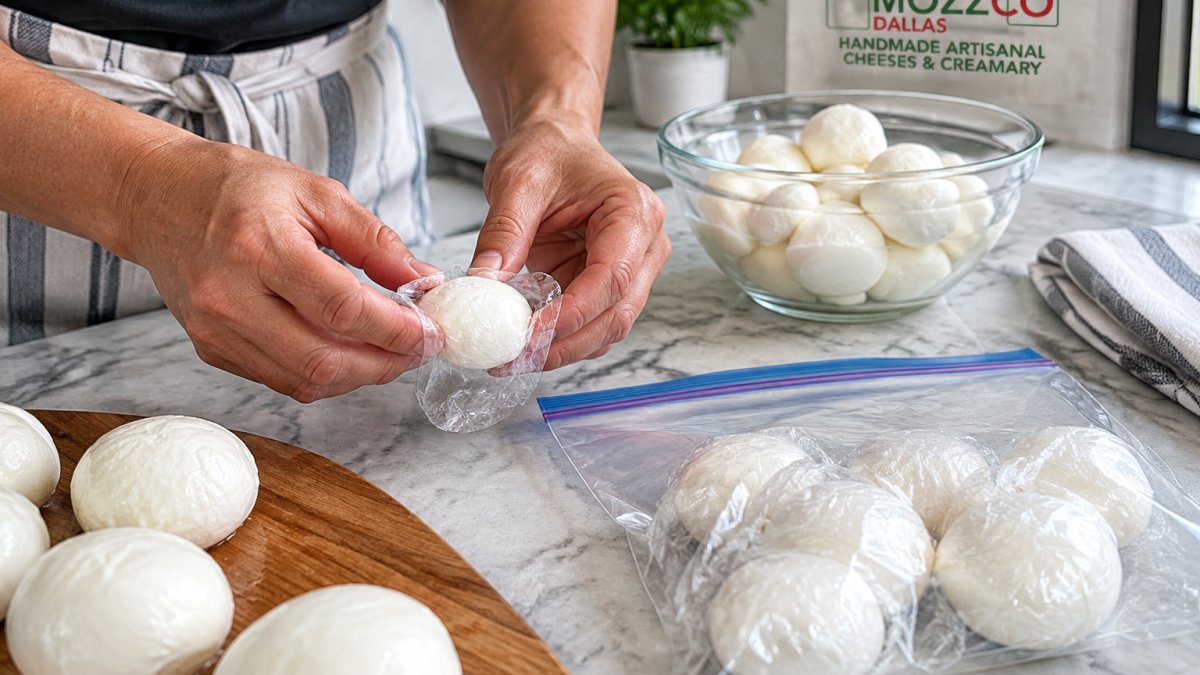
- Wrap tightly. Wrap each ball, or a small group, in plastic wrap, pressing out air.
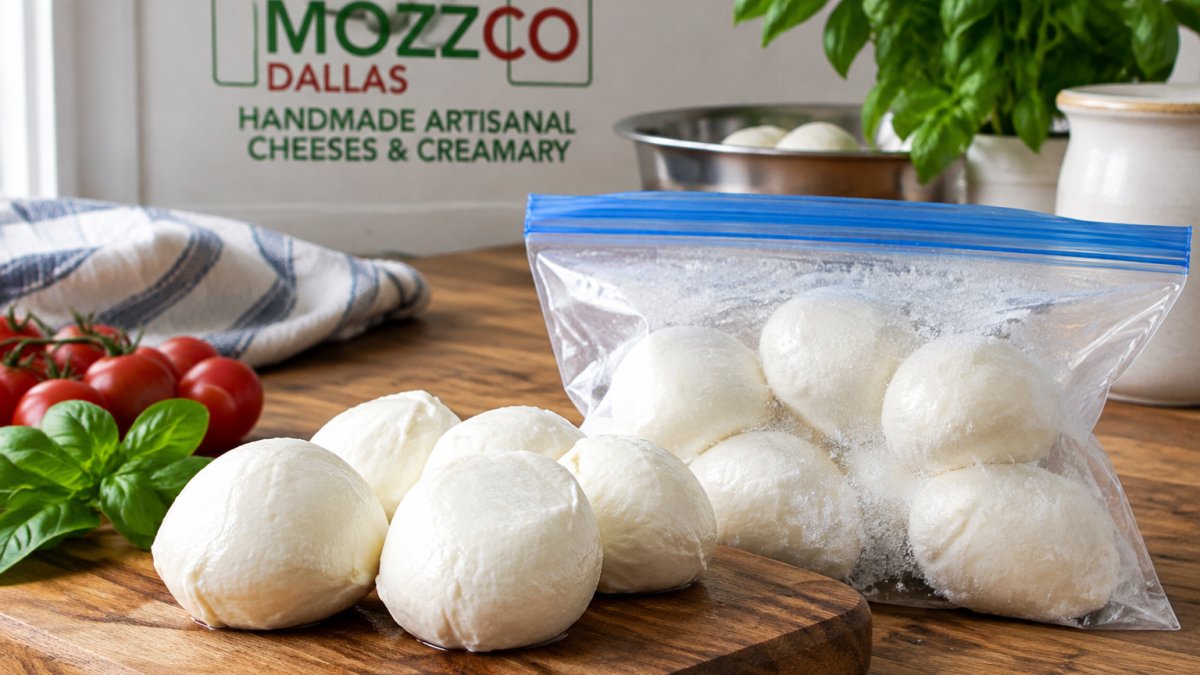
- Bag it. Place wrapped balls in a freezer bag and press out as much air as you can.
- Label it. Write the date on the bag. You will thank yourself later.
- Freeze fast. Set the bag flat on a shelf in the coldest part of the freezer, not in the door.
Preparing and Wrapping Different Ball Sizes and Packaging
Ball size and packaging change how you wrap. Small balls like bocconcini freeze faster and clump together, so freeze them in a single layer first, then bag them. Large balls should be wrapped one at a time so they freeze evenly. If you are working with bite-sized pieces, our bocconcini are a good example of the smaller format that needs that single-layer step.
Balls packed in brine or whey: Drain them well and pat dry before wrapping. The liquid will freeze into a solid block and trap extra water against the cheese, which increases texture damage. If you want to freeze them in liquid, see the section below on freezing in liquid.
Opened packs: If you have opened a pack and only used some of the balls, freeze the rest the same day. Do not let them sit in the refrigerator for days first. Pat them dry, wrap tightly, and bag.
Watch out: stuffing a big bag of wet balls straight into the freezer is the most common mistake. They freeze into one solid lump, and you end up thawing more than you need. Freeze them in a single layer on a tray first, then transfer to a bag once frozen.
How Long Can You Freeze Fresh Mozzarella Balls?
Frozen fresh mozzarella balls are generally best used within a few months, as texture changes tend to increase over longer storage.
A few practical notes:
- Freeze on the day you buy or open the cheese, not a week later.
- Keep the bag sealed and push out air each time you open it.
- Avoid refreezing after thawing, as repeated freezing further degrades texture.
- Mark the date, and use the oldest bag first.
Frozen balls are best used for cooking rather than serving once they have been in the freezer a while.
How Long Can You Freeze Mozzarella in Its Liquid?
You can freeze mozzarella in its liquid, but drain it first if you want the best result. The liquid itself freezes into a solid block around the cheese, which slows thawing and traps extra water against the surface.
If you want to freeze it as-is, here is how to keep it reasonable:
- Pour off most of the liquid and leave just enough to coat the balls.
- Seal the container tightly, leaving a little headspace for expansion.
- Thaw in the refrigerator, never on the counter.
Water-packed balls like our mozzarella latte balls are the type most often frozen this way. Expect more liquid separation when you thaw, and pour it off before using the cheese.
Can You Freeze Fresh Mozzarella for Pizza?
Freezing mozzarella for pizza is the best use case for it. Heat covers a lot of texture sins, and mozzarella that has been frozen and thawed melts well on a hot pie.
Here is how we would do it:
- Freeze balls whole, or shred or tear them before freezing for faster use.
- Thaw in the fridge overnight, then drain and pat dry.
- Tear or slice the cheese and blot again before it hits the dough.
- Use it on cooked dishes, not cold salads.
If you are planning a pizza night, browse our best sellers to pick the cheese for your next pie. Tearing rather than shredding gives you better pockets of melt.
Can You Freeze Mozzarella Balls in Oil?
Freezing mozzarella packed in oil is not a good idea. Oil and water do not mix, and the oil traps moisture against the cheese while it freezes. You end up with a greasy, watery result when it thaws.
If your mozzarella came in oil and you want to freeze it:
- Drain the oil and pat the balls dry first.
- Wrap and bag as usual.
- Expect a softer, oilier surface after thawing.
The oil itself does not protect the cheese. It just makes the thaw messier.
Thawing, Using, and Troubleshooting Frozen Mozzarella
Thaw frozen mozzarella in the refrigerator, still wrapped, until it is fully softened. Slow, cold thawing gives the least texture damage. Larger balls take longer than small ones. The refrigerator is the best place to thaw it.
Once thawed, here is how to handle it:
- Drain and blot. Pour off any liquid and pat the cheese dry. Thawed mozzarella often releases water, so blotting is key.
- Use it cooked. Pizza, baked pasta, panini, and lasagna are all good homes for thawed mozzarella. Heat covers a lot of texture sins.
- Skip the cold salad. A thawed ball will not have the clean bite a fresh one does. Its texture is looser and wetter, so it is not suited for caprese or fresh serving.
- Taste before you toss. If it smells sour or looks slimy, throw it out. But a little liquid separation is normal and not a safety issue.
Quality versus safety: Freezing and thawing change texture, but they do not make the cheese unsafe. A thawed ball that smells clean and looks normal is fine to eat. However, once thawed, treat it like fresh mozzarella: keep it in the refrigerator and use it within a few days. Do not refreeze after thawing. Arla Pro advises against refreezing thawed dairy, and that guidance holds here. For more on safe storage, see the USDA FoodSafety.gov cold food storage guidance.
A quick troubleshooting table:
| Problem | Likely Cause | Fix |
|---|---|---|
| Rubbery texture | Slow freezing, large ice crystals | Freeze colder and faster next time |
| Crumbly or grainy | Long storage, moisture loss | Use within four months, seal tightly |
| Pool of liquid after thaw | Water-packed cheese, slow thaw | Drain and blot before use |
| Greasy surface | Frozen in oil | Drain oil before freezing |
| Freezer burn | Air in the bag | Press out air, double-wrap |
For more on keeping cheese at its best, our cheese storage guide covers the fridge and freezer basics in one place.
FDA refrigerator and freezer storage chart
Frequently Asked Questions
Do mozzarella balls freeze well?
They freeze, but not perfectly. Fresh mozzarella carries a lot of moisture, and freezing turns that water into ice crystals that break down the protein structure. You will likely notice a rubbery or crumbly texture once thawed, along with some liquid separating out. The cheese is still safe to eat, but it works better melted into cooked dishes than sliced cold on a salad. If you plan to freeze fresh mozzarella, wrap it tightly and use it within a few months.
How long will mozzarella balls last in the refrigerator?
Unopened fresh mozzarella in its liquid keeps for a limited time past the pack date when stored cold. Once you open the package, plan to eat it soon. If you cannot finish it in time, freezing is a reasonable backup, though the texture will change. Always check the date on the package and use your senses: sour smells or slimy surfaces mean it is time to discard it.
Is it better to freeze mozzarella cheese in a block or shredded?
Shredded cheese can be convenient for pizza and casseroles, while whole blocks let you grate them yourself later. For fresh mozzarella balls, leave them whole or cut into portions, wrap tightly to keep air out, and freeze. Shredding fresh mozzarella before freezing tends to make the texture problem worse because more surface area is exposed to ice crystal damage.
Can you freeze buffalo mozzarella cheese?
Yes, but expect the same texture changes as cow's milk fresh mozzarella, sometimes more pronounced because buffalo mozzarella tends to be even higher in moisture. Wrap it tightly, freeze it for a few months, and thaw it in the refrigerator. Use thawed buffalo mozzarella in cooked applications like baked pasta or pizza rather than serving it fresh, where its delicate texture matters most.