 How-to
7 Steps to Build a Cheese Board That Wows Your Guests
Last Updated: November 1, 2026
Quick Summary
To build a cheese board, pick three to five cheeses on a small board or five to seven on a large one, mixing soft, semi-soft, firm or aged, and blue or goat styles. Add charcuterie, fruit, crackers, olives, and something sweet, then plan about 1.5 to 3 ounces of cheese per person.
- Cut soft cheeses into wedges, firm cheeses into thin rectangles, and blue cheese into rough crumbles.
- Plan 2 to 3 ounces of meat per person when charcuterie is included.
- Take the cheese out of the fridge about 30 minutes before serving.
- Assemble most of the board a few hours ahead and add soft cheeses and crackers last.
- For 15 or more guests, build two or three themed boards rather than one crowded one.
Table of Contents
- Step 1: Choose Your Cheeses for a Balanced Cheese Board
- What to Put on a Cheese Board Beyond the Cheese
- How to Cut Cheese for a Cheese Board
- How Much Cheese per Person and Other Portion Rules
- Cheese Board Ideas for Every Occasion and Diet
- How Far in Advance Should I Make a Cheese Board?
- Build Your Board with Handmade Cheeses from Mozzarella Company
- Frequently Asked Questions
Step 1: Choose Your Cheeses for a Balanced Cheese Board
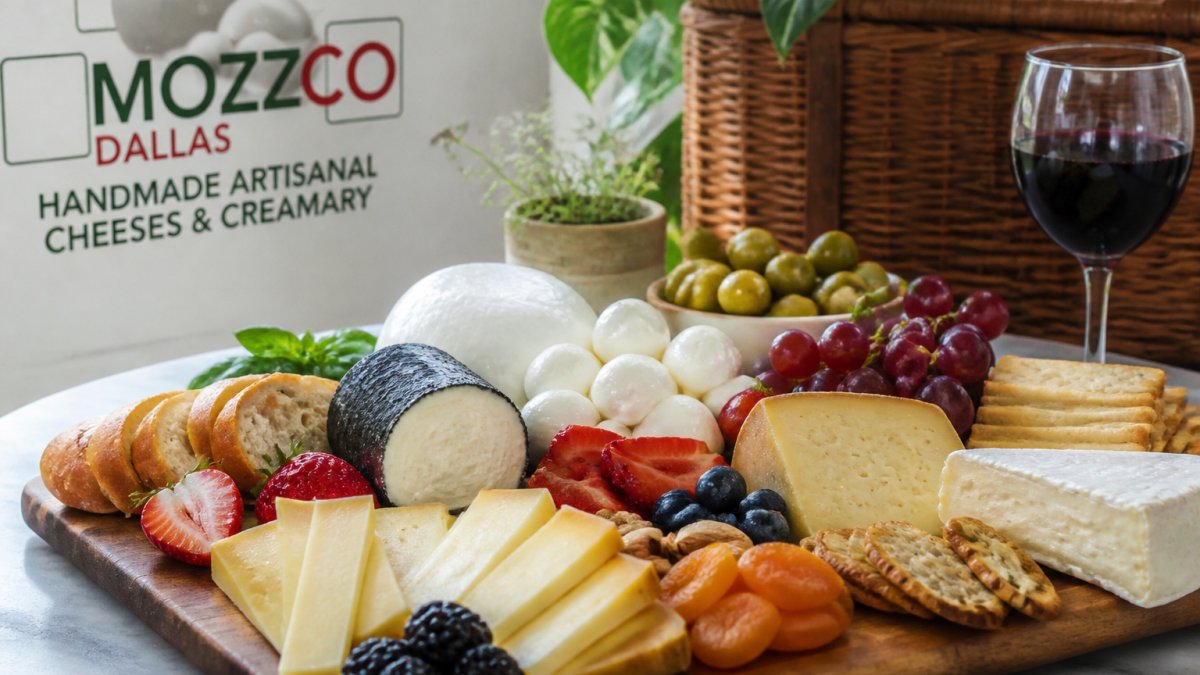
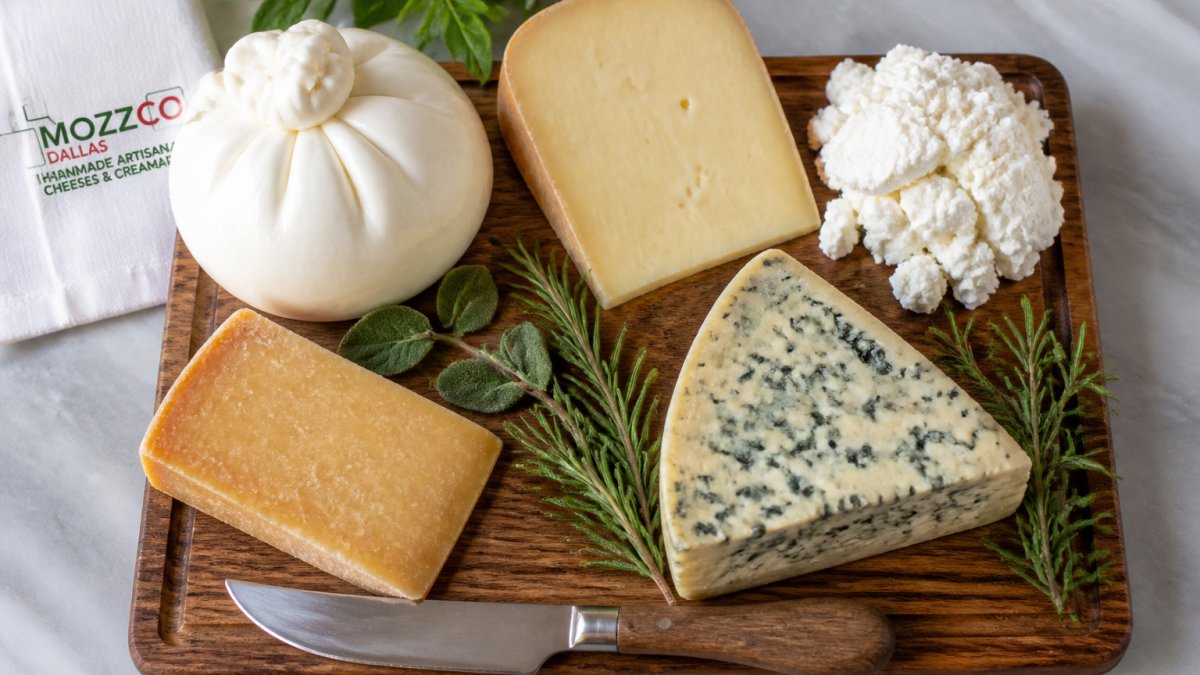
A good cheese board starts with the cheese, and the rule we follow at Mozzarella Company is simple: pick a mix of textures and flavors so every guest finds something to love. Aim for three to five cheeses on a small board and five to seven on a large one. A common approach is one soft and creamy cheese, one semi-soft, one firm or aged, and one bold blue or tangy goat cheese.
That spread gives you contrast in flavor, texture, and color. Mild cheeses balance sharp ones. Creamy cheeses balance crumbly ones. If you want a deeper walkthrough of picking styles, our guide on how to choose artisanal cheese breaks down what to look for.
What to Put on a Cheese Board Beyond the Cheese
Cheese is the star, but the supporting cast makes the board feel complete. Build around it with meats, produce, crunch, and something sweet or briny.
- Charcuterie: prosciutto, salami, and cured ham, folded loosely rather than stacked flat
- Fruit: grapes, sliced apple or pear, figs, and dried apricots for color and sweetness
- Crunch: crackers, sliced baguette, breadsticks, and nuts
- Briny bites: olives and cornichons
- Accompaniments: honey, fig jam, whole-grain mustard, and small bowls of dips
- Garnish: fresh rosemary or thyme tucked into gaps
For wine ideas to round out the spread, see our wine pairing guide.
How to Cut Cheese for a Cheese Board
How you cut cheese changes how easy the board is to eat. Cut each style the way it's meant to be served, and give guests a small cheese knife for each one.
- Soft cheeses: slice into wedges or scoopable portions
- Firm and aged cheeses: cut into thin rectangles or triangles
- Blue cheese: break into rough crumbles
- Log-style goat cheese: slice into coins
A common mistake is cutting everything into cubes. It looks tidy but makes soft cheese hard to pick up. Pre-cut a portion of each cheese, then leave the rest whole with a knife nearby so guests can help themselves.
How Much Cheese per Person and Other Portion Rules
Portion planning is where most boards go wrong, either guests run out in twenty minutes or you're left with a mountain of leftovers. Here's a practical framework for planning a spread.
Start with cheese. For an appetizer board, plan about 1.5 to 3 ounces of cheese per person, a range commonly cited by cheesemongers, including Antonelli's Cheese board-building guide. For a cocktail-hour spread where the board is one of several bites, stay near the low end. When the board is the main event, a holiday open house, a long dinner party, plan on the higher end, closer to 3 ounces per person.
Scale the rest of the board to match:
- Meat: 2 to 3 ounces per person when charcuterie is included
- Crackers and bread: about half a box of crackers per guest, plus roughly one slice of baguette per person if you're offering both
- Accompaniments: one small bowl of jam, honey, or mustard per six to eight people, and one bowl of olives or cornichons per eight to ten
- Fruit and nuts: a generous handful per person total, split between fresh and dried
Size the board to the crowd. Match the board to the number of guests. In practice:
- 4 to 6 guests: a small board or large platter, 3 cheeses
- 8 to 12 guests: a large board or two medium boards, 5 cheeses
- 15 or more: build two or three themed boards rather than one crowded one, a cheese board, a charcuterie board, and a produce-and-dip board
Plan for a little over, not a lot over. It's better to overplan slightly than run short, but a 10 to 15 percent cushion is plenty. Store leftovers promptly and keep them cold.
Tools and setup matter as much as quantities. Give each cheese its own small knife, a soft-cheese knife for creamy styles, a firm-cheese knife for aged wedges, and a small fork or spreader for crumbles. Set out a few small bowls for dips, jams, and olives. And leave a little breathing room between items; a board packed edge to edge looks abundant but is hard to serve from.
Cheese Board Ideas for Every Occasion and Diet
Match the board to the crowd, and everyone leaves happy. The trick is to pick a cheese lineup and a supporting cast that fit the occasion, then build in clear alternatives for guests with dietary needs, without making anyone feel like an afterthought.
By occasion:
- Casual gathering or game day: lean on mild, crowd-pleasing cheeses, fresh mozzarella, a semi-soft caciotta, and a mild goat cheese, with plenty of crackers, salami, and grapes
- Holiday table: go bolder with aged and blue varieties alongside a creamy anchor, and add dried fruit, nuts, and a dish of honey
- Cocktail hour: keep it light and easy to eat standing up, pre-cut soft cheeses, small crackers, olives, and prosciutto folded into loose ribbons
- Brunch board: pair fresh cheeses with sliced baguette, fruit, and a small bowl of jam; keep the meats light
- Dessert-adjacent board: creamy cheeses, honey, fig jam, dark chocolate, and nuts
By dietary need, build in swaps, not afterthoughts:
- Vegetarian: skip the charcuterie and lean on olives, nuts, roasted peppers, marinated artichokes, and dips; label the board clearly so guests know it's meat-free
- Vegan or dairy-free: set up a small separate board with olives, nuts, fruit, cured meat if the guest eats it, hummus or a bean dip, and vegan crackers, don't try to make one board do everything
- Gluten-free: offer rice crackers and gluten-free bread alongside the baguette, and keep them in their own bowl or section so crumbs don't mix
- Nut allergies: serve nuts in a small bowl rather than scattered across the board, and keep the serving spoon dedicated to that bowl
- Pregnancy or immune-compromised guests: soft and blue cheeses are often avoided; offer firm aged cheeses and clearly label what's what
The simplest way to be inclusive is to label everything. Small tags or a handwritten card listing each cheese and its accompaniments lets guests make their own choices without having to ask.
If you're hosting a group event, a hands-on cheese-making class makes a memorable occasion, and we offer public classes on Saturdays and private group classes on Wednesdays.
How Far in Advance Should I Make a Cheese Board?
You can assemble most of a cheese board a few hours ahead. Set out the cheeses, wash and dry the fruit, slice the bread, and pre-cut the firmer cheeses, then cover the board loosely and keep it cool until serving.
Add the delicate items last. Soft cheeses, cut fruit, and crackers go on right before guests arrive so nothing dries out or goes soft. Take the cheese out of the fridge about 30 minutes before serving so it can come closer to room temperature. Set out smaller portions and refresh them rather than leaving a large board out for hours.
Build Your Board with Handmade Cheeses from Mozzarella Company
The easiest way to build a cheese board that impresses is to start with great cheese. We've been making handmade cheeses here in Dallas since 1982, and our fresh mozzarella, burrata, caciotta, and goat cheese are made in our own factory.
Start with our fresh mozzarella and burrata for the creamy side of your board. Browse our cheese gift baskets when you want the whole spread shipped to someone. And if you'd rather learn by doing, our cheese-making classes put the craft in your hands.
Frequently Asked Questions
What is the 3-3-3 rule for a cheese board?
The 3-3-3 rule is a simple guideline: choose three cheeses, three meats, and three accompaniments (like crackers, fruit, and nuts). It helps you create a balanced board without overthinking. For a small gathering, this rule works well; for larger groups, scale up to five cheeses and more variety. The key is to offer contrast in flavor and texture so every guest finds something they love.
How much cheese should I serve per person?
For appetizers, plan on 1.5 to 3 ounces of cheese per person, as a common guideline. If the board is the main food, aim for the higher end. For a party of six, that’s about 9 to 18 ounces total. Pair with meats, crackers, and fruit to round out the spread. Always consider your guests’ appetites and the time of day.
How far in advance can I make a cheese board?
You can assemble most of the cheese board a few hours ahead, keeping it covered and cool. Add delicate items like fresh fruit, soft cheeses, and crackers just before serving to prevent sogginess. For the best texture and flavor, let the board sit at room temperature for 30 minutes before guests arrive.
What should I serve with cheese on a board?
Balance cheese with contrasting textures and flavors: crackers and bread for crunch, fresh and dried fruit for sweetness, nuts and olives for saltiness, and charcuterie for savory depth. Include a few dips or jams, like fig jam or honey, to complement the cheese. Garnish with fresh herbs for color. The goal is variety so guests can mix and match.
Building a board that looks and tastes balanced takes a little planning, but the payoff is a table full of happy guests. We're here to help you get there. Browse our best sellers and gift baskets, or book a class, and get started with Mozzarella Company today.